
You have a cordless screwdriver sitting right there on the shelf. You need a small hole. The drill is packed away somewhere, or maybe you just never bought one. So the question comes up — can this thing actually do the job?
It is a fair question. Both tools spin, use bits, and run on battery power. Using a cordless screwdriver on hardwood or masonry for light tasks can be manageable, but expecting it to perform like a proper drill may lead to tool burnout and project difficulties. The honest answer is: sometimes yes, sometimes no. And knowing which situation you are in makes all the difference.
1. What Is the Difference Between a Cordless Screwdriver and a Drill?
Key Functions of a Cordless Screwdriver vs. a Drill
People treat these two as interchangeable. They are not. Yes, there is overlap. But they were built for different jobs.
|
Feature |
Cordless Screwdriver |
Cordless Drill |
|
Primary Job |
Driving screws into pre-drilled surfaces |
Drilling holes + driving screws |
|
Motor Strength |
Low to moderate |
Moderate to high |
|
Speed Settings |
Usually 1 or 2 |
Multiple, often with clutch |
|
Weight |
Light |
Heavier |
|
Chuck Type |
Fixed hex or small keyless |
Keyless, accepts round and hex shanks |
|
Best For |
Light assembly, furniture, cabinetry |
Wood, metal, masonry, mixed jobs |
A cordless screwdriver is a driving tool. A drill is primarily designed for drilling holes but is also capable of driving screws. That is the real difference. One was designed around torque control for screws. The other was built around a sustained rotational force to cut through material.
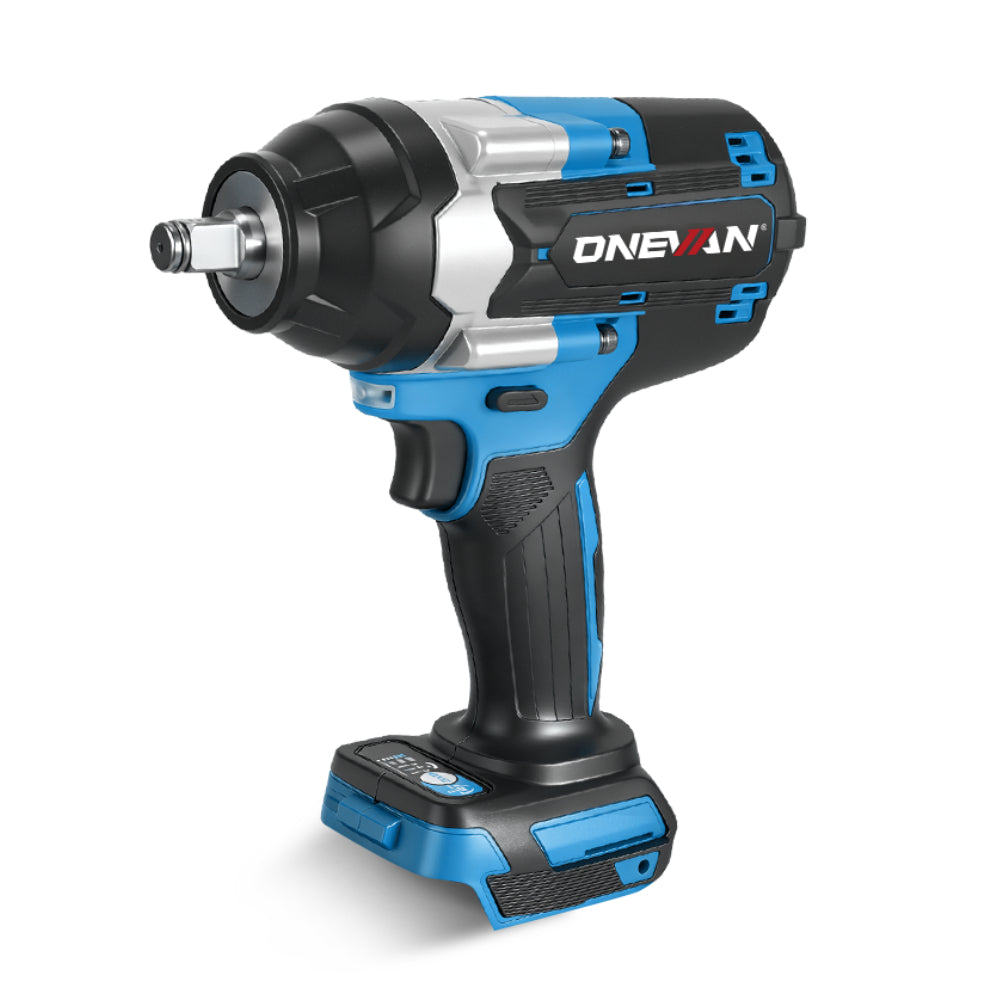
The ONEVAN 16.8V cordless screwdriver delivers up to 40N·m torque for powerful drilling and fastening. Its brushless motor provides a longer tool life with less heat and better efficiency. You can use 21+2 torque settings and 1380 RPM to handle various precision tasks easily.
Torque and RPM: How They Differ Between Tools
Torque is what pushes through resistance. RPM is how fast the bit spins. Most cordless screwdrivers typically produce torque ranging from 4 to 15 Nm, but some modern models may exceed this range. A standard cordless drill starts around 25 Nm and goes well past 60 Nm for heavier models. That is not a small gap. When you are asking a low-torque tool to spin a drill bit through dense wood, the motor strains, slows, and heats up fast.
RPM works the other way. Drills can throttle down to low speeds with high torque for tough drilling. Screwdrivers spin fast, but without that pulling power underneath.
So what actually happens when you use a screwdriver for drilling? The bit makes contact, friction builds, and the motor fights to keep spinning. On soft material with a sharp bit, it works. On anything with real density, the tool struggles from the first few seconds.
Chuck Size Comparison: What You Need to Know
Most cordless screwdrivers accept a 1/4-inch hex shank. That is it; a round-shank drill bit cannot fit into a hex chuck, leading to slippage or wobbling when loaded.
Cordless drills are supplied with a keyless chuck, normally 3/8 inch or 1/2 inch. They take either hex or round shanks, and that is why you can use regular drill bits, spade bits, hole saws, etc.
So what is the significance of this to drilling? Due to their quality, drill bits that cut cleanly and remain sharp are available with round shanks. The hex-shank drill bits which fit a screwdriver are offered, but the range of choice is limited, and the performance on harder materials is significantly worse. Bit stability also drops. A hex shank in a worn screwdriver chuck wobbles slightly. That wobble widens holes and chips edges.
2. When Can You Use a Cordless Screwdriver for Drilling?
Suitable Soft Materials
Wood: Plywood, pine, balsa, MDF, thin softwood — these are the sweet spots. You are not going through oak joists or hardwood flooring. But a 3/8 inch hole through a 1/2 inch sheet of plywood? A cordless screwdriver equipped with a sharp hex-shank bit can effectively handle this task with minimal difficulty. Generally, softwoods like pine and plywood offer less resistance compared to hardwoods, but the specific type and condition of the wood can still affect motor strain.
Plastic: Thin plastic panels, PVC sheets, acrylic up to about 6mm — these go through cleanly at low to moderate speed. The bigger risk with plastic is heat, causing the material to melt and bind around the bit. Go slow, use light pressure, and the screwdriver does the job well.
Light-Duty Applications
Assembling Furniture: Flat-pack furniture rarely needs actual drilling. Pre-drilled holes are typically provided in flat-pack furniture. However, creating pilot holes for wood screws into materials like particle board or thin softwood panels is also well within the capabilities of a cordless screwdriver.
Installing Lightweight Fixtures: Curtain rod brackets into drywall anchors, small shelf brackets, picture frame hooks — these do not ask much from any tool. The screwdriver is more than enough here.
Craft Projects: Wooden boxes, small frames, thin hobby wood, balsa constructions — craft work almost never pushes past what a screwdriver can do. The precision and light touch of a screwdriver is actually better suited here than the raw power of a drill.
Creating Pilot Holes: This is one of the most effective use cases for a cordless screwdriver. A pilot hole just needs to go far enough to guide a screw without splitting the wood. Shallow, narrow, in soft material. The screwdriver does this well, and it reduces the chance of over-drilling.
Working with Electronics: Casings, thin plastic housings, circuit board mounts — these need delicate, controlled holes. The lower power of a screwdriver is actually an advantage. You are less likely to crack a fragile part.
Jobs Requiring Limited Space
A cordless screwdriver is short and slim. Getting a full-size drill into a tight cabinet corner or inside a small enclosure is awkward. The compact body of a screwdriver fits where drills cannot. For shallow pilot holes in tight spots, the tool that physically reaches the work is the right choice, regardless of what it is.
Tasks with Low Torque Requirements
Thin material, sharp bits, pre-marked holes, light pressure — when all of these line up together, the torque gap between a screwdriver and a drill stops mattering. The resistance the bit meets is so low that even the weaker motor completes the job.
3. Understanding the Risks of Using a Cordless Screwdriver as a Drill
Overheating Issues: Should You Be Concerned?
Yes, genuinely. The motors in cordless screwdrivers are small and not built for sustained loads. Drilling, even in soft material, creates continuous resistance. The motor runs hot, the battery drains faster, and if you push too long without a break, the thermal protection kicks in and the tool shuts off.
Excessive heat can lead to degradation of motor windings and battery cells over time, especially with prolonged use. You might not notice after one session. But after twenty? The tool dies earlier than it should.
The rule is simple: As a general guideline, if the tool becomes noticeably warm after drilling a few holes in softer materials, stop and allow it to cool down completely before continuing. For harder materials, even fewer holes may lead to overheating.
Bit Wobble: How This Impacts Your Work
A hex chuck on a screwdriver grips the flat sides of the hex shank of the bit. Under drilling load, especially when the bit meets resistance, the chuck flexes slightly. That flex translates to wobble at the tip. A 4mm hole becomes 4.5mm. A clean edge becomes ragged. For a pilot hole in the pine, that is acceptable. For a precise hole in a visible panel, it is not.
Bit wobble also accelerates wear on both the bit and the chuck. The metal-on-metal contact at the gripping faces grinds each time the bit deflects.
Safety Considerations: Important Practices
Never force a screwdriver through material that it is resisting. The tool should operate smoothly without excessive force. If you find yourself needing to apply significant weight to drive the tool, it is an indication that you are using it beyond its intended capacity.
Secure your workpiece. A screwdriver does not have the stopping power of a drill, so if the bit catches and the tool slips, there is less control.
Wear eye protection. Small bits can snap under stress, especially no-name hex bits that run hard in tough material.
Maintain a secure grip on the tool, but avoid excessive tension, as a too-tight grip during sudden tool catches can lead to wrist strain.
4. Alternative Tools and Tips for Enhanced Drilling Using a Cordless Screwdriver
Why Use a Dedicated Drill Instead of a Cordless Screwdriver?
When considering whether to use a cordless screwdriver or a drill, it’s important to recognize that for tasks involving larger holes, hardwood, metal, or deeper drilling, a proper drill is recommended. You are not just getting more power. You are getting a variable speed that lets you start slow and build, a clutch that stops the bit when it breaks through to prevent over-penetration, and a chuck that holds the bit rigidly without flex.
For a one-time job, improvising works. But if you drill more than occasionally, having a basic cordless drill does not replace the screwdriver. Both earn their spot.
Helpful Attachments for Your Cordless Screwdriver
A right-angle attachment converts the rotary output sideways. This helps enormously in tight spaces where the full tool body cannot align with the workpiece.
A flexible drive extension allows you to navigate around corners and into awkward angles. Useful for small pilot holes inside cabinets or narrow enclosures.
Depth stop collars slip over the bit shank and stop the hole at a set depth. For consistent shallow pilot holes, these are cheap and effective.
Bit Sets Specifically Designed for Cordless Screwdrivers
Standard 1/4 inch hex drill bit sets designed for impact drivers and screwdrivers exist and work well. The hex shank is machined specifically for the chuck. Look for sets with titanium nitride coating — they cut easier, which means less load on the motor.
Brad-point bits make a noticeable difference in wood. The center point starts the hole cleanly without the bit skating across the surface. Less skating means less pressure required, which means less heat and less strain.
Avoid using old or dull bits. A dull bit multiplies the resistance the motor faces. It is the fastest way to overheat the tool and get a bad result.
5. Step-by-Step Guide: How to Safely Drill with a Cordless Screwdriver
Preparing Your Workspace: What to Do Before Drilling
- Marking the Hole Location
- Checking Bit
- Clamp Thin Materials
- Set Your Screwdriver
- Keep your Battery Well-Charged
Mark the hole location with a pencil and punch a small indent with a center punch or a nail. That indent stops the bit from wandering when it first makes contact.
Check your bit. Look at the cutting edge. If it has visible wear, swap it out before starting. A sharp bit is doing the work. A dull bit means the motor does the work.
Clamp down on thin materials. Plywood and thin plastic sheets have a tendency to spin or crack if not secured. Two clamps, five seconds. Worth it.
Set the screwdriver to its highest torque setting if it has selectable settings. Drilling needs torque, not speed.
Check the battery charge before use, as a low battery under drilling load can drop voltage and significantly reduce the motor's torque. Start with a full or near-full battery.
How to Drill Safely with a Cordless Screwdriver: Effective Techniques
1. Position the bit tip on the center punch mark. Hold the tool perpendicular to the surface — check from two angles if needed.
2. Start the tool before making contact with the surface. Let it reach speed, then lower it gently onto the mark.
3. Apply light, steady forward pressure. Do not push hard. The bit should be cutting, not grinding. If progress stalls, ease off rather than push harder.
4. Every 10 to 15 seconds on a deeper hole, pull the bit fully out to clear chips and let the bit cool briefly.
5. As you approach breaking through the other side, reduce pressure. Breaking through too hard splinters the exit face.
6. Once through, reverse the tool briefly to help the bit disengage cleanly.
Post-Drilling Tips: What to Do After You Are Done
- Check The Hole Edge
- Clean the Bit
- Checking Tool Temperature
- Inspect the Chunk
- Store Bits Separately
Carefully run your finger around the edge of the hole to check for raised splinters or rough edges that could affect the quality of the finished project. Raised splinters on wood mean the bit is starting to dull. Address it before the next session.
Wipe the bit down. Sawdust and plastic residue sitting on the cutting edge will oxidize and dull it faster than it does.
Check the tool temperature. If it is warm to the touch, set it down for at least 15 minutes before using it again for any sustained drilling.
Observe the chuck. If the bit slips or moves inside the chuck during drilling, the gripping surfaces of the chuck may be worn. A worn chuck is a wobble problem waiting to get worse.
Store bits separately from the tool. Bits rolling loose in a drawer with the screwdriver nick the cutting edges.
6. Conclusion
A cordless screwdriver punching a hole through a sheet of pine or a thin plastic housing is a completely reasonable thing to do. It works. The tool handles it without drama, and you get a usable result.
However, it is important to acknowledge the limitations of cordless screwdrivers in specific applications. Torque is low. The chuck accepts only hex-shank bits. Heat builds up faster than with a drill. And the moment the material gets hard, deep, or wide, the tool is past its range.
The practical takeaway is this: know the job before you pick up the tool. Soft material, small holes, light use — the screwdriver is fine. Hardwood, metal, large-diameter holes, or anything requiring sustained effort — borrow or buy a proper drill. Using the right tool is not about being precious with equipment. It’s about getting the job done correctly the first time — without damaging the tool in the process.
7. FAQs
Can a cordless screwdriver drill wood?
Yes, in soft woods and thin panels. Pine, plywood, MDF, and balsa all respond well to a sharp hex-shank bit in a cordless screwdriver. Hardwood is a different story — the motor strains quickly, the bit heats up, and the result is usually a rough hole and an overheated tool. Stick to softwood under about 25mm thick for the best results.
Can I drill metal with a cordless screwdriver?
Thin sheet metal — approximately 0.04 to 0.06 inches — is possible with a sharp HSS hex-shank bit. Anything thicker is genuinely difficult. The torque is not there to push through resistance, and the heat generated will dull the bit almost immediately. For metal work, a proper drill running at the right speed is not optional.
Are drill bits compatible with a cordless screwdriver's chuck?
Only hex-shank drill bits fit. Standard round-shank bits do not fit securely in a hex chuck due to their design, which can lead to slippage and inefficiency under load. Always use hex-shank bits with a hex chuck for optimal performance. The range of hex-shank drill bits available is narrower than that of round-shank options, and performance in harder materials is lower. If you need round-shank bits, you need a keyless chuck, which means a drill.
Should I switch to a dedicated drill for larger holes?
Yes. Most cordless screwdrivers cannot provide sustained torque of more than 8mm without overheating. Big holes also produce more lateral action on the bit, which the flex in a hex chuck cannot clean. It is a special drill with torque, chuck stability, and speed control to work with larger holes without damaging the tool or the workpiece.
How can I prevent overheating when drilling with a cordless screwdriver?
Take breaks. After every two or three holes, let the tool rest for a minute. Pull the bit out regularly during deeper holes — this clears chips and briefly exposes the bit to air. Use sharp bits. Dull bits create far more heat than sharp ones. Keep sessions short. If the tool housing is getting warm, stop entirely and wait at least 15 minutes before continuing.
How do I choose the right bits for cordless screwdriver drilling?
Look for 1/4 inch hex-shank bits specifically designed for screwdrivers or impact drivers. Brad-point bits for wood give cleaner starts and require less pressure. HSS bits work for occasional use on thin, soft metal. Titanium-coated bits last longer and cut with less resistance, reducing motor load. Buy a name-brand set — cheap bits from unknown brands lose their edge after a few holes and turn every job into a fight.