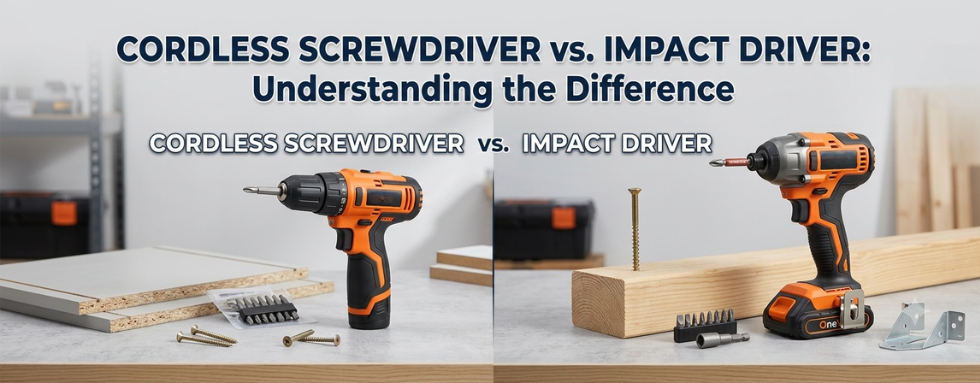
You are in a hardware store, and you have a cordless screwdriver and an impact driver in front of you. Both drive screws. But the problem is that they are not the same tool. If you pick the wrong one, you will either strip the screw head or crack the wood surface, and also struggle to finish the job. So, what is the actual difference? These two tools use different internal systems to deliver force. One uses steady rotation with a clutch. The other uses quick hammer blows plus rotation. This changes how they work and where you should use them.
This article explains both tools clearly. You will find out how they work, what the numbers mean, and which one fits your job.
1. What Is a Cordless Screwdriver?
Definition and Core Mechanism of Cordless Screwdriver
A cordless screwdriver is a battery-powered tool for driving and removing screws. It uses a motor that spins the bit at a steady speed. Here is what makes it different from a basic drill: it has a torque-limiting clutch. This clutch is the collar around the front of the tool, and you can twist it to set the torque level.
When the screw reaches that torque level, the clutch slips. You hear a clicking sound, and the bit stops turning. So the screw does not go in any deeper. This is useful when driving into soft materials like particleboard or thin plywood. For example, IKEA furniture panels are usually 15 to 18mm thick particleboard. Too much torque and the screw head sinks right through the surface.
Most models use a 1/4-inch hex chuck or a 3/8-inch keyless chuck. The 3/8-inch chuck can hold both round-shank drill bits and hex-shank screwdriver bits, so you can also drill small pilot holes with the same tool.
Common Accessories and Bit Types of Cordless Screwdriver
The most common bit types are Phillips bits in sizes 1, 2, and 3. Size 2 is the most used because most wood screws have a PH2 head. You also need slotted bits for older fasteners and hex bits for furniture bolts.
For instance, when you assemble flat-pack furniture, almost all the screws need a PH2 bit. A Torx T25 bit is common in outdoor decking screws. Magnetic extension holders are also helpful because they let you hold the screw on the bit while you position it, so you do not need two hands just to start a screw.
What are the Key Features of Cordless Screwdriver Buyers
Here are the features you should check before you buy a cordless screwdriver:
-
Adjustable torque settings
These are usually 6 to 21 steps. More steps mean finer control for delicate work like driving small screws into thin wood.
-
Forward and reverse switch
With this switch, you can drive screws in and take them out. You will use this a lot during furniture assembly.
-
Weight
Weight between 1.5 and 3 lbs. The lighter the tool, the less arm fatigue you get over a long session.
-
LED Light
LED work light for working inside cabinets or dark corners.
-
Battery indicator
A 12V 1.5Ah battery gives you around 150 to 200 screws per charge for light work.
These features matter for beginners because they give you control and comfort without needing experience to judge torque manually.
2. What Is an Impact Driver?
An impact driver looks similar to a cordless screwdriver from the outside, but the inside works very differently.
What Are the Key Features of an Impact Driver for Buyers?
An impact driver delivers two things at once: rotational force and concussive blows along the same axis. Picture driving a nail with a hammer, where each hit pushes the nail deeper. Now imagine that same action happening to a screw automatically, dozens of times per second. That is what the internal hammer mechanism does.
When you start driving a screw, the motor spins normally. However, when the fastener meets resistance in tough materials, the hammer mechanism automatically activates. Small internal hammers strike an anvil inside the tool, adding extra bursts of rotational force with each turn. The result is significantly more driving power without requiring you to push harder on the tool.
Most impact drivers fire between 2,000 and 3,600 impacts per minute (IPM). A higher IPM generally translates to faster, more efficient driving when working through dense or stubborn materials.
Common Accessories and Bit Types of Impact Drivers
To get the best performance, you must use the right bits. While standard screwdriver bits physically fit into an impact driver, they tend to crack, chip, or shatter rapidly under the intense force of the hammer blows. Therefore, impact-rated bits are the better choice.
- Impact-rated hex shank bits: Specially engineered from stronger steel, designed to absorb sudden torque spikes without breaking.
- Magnetic sleeve kits: Designed to firmly hold the bit and screw in place, preventing wobbling or dropped fasteners during driving.
- Nut setters: Attachments that allow you to drive nuts and hex-head bolts quickly using the same impact driver.
- Socket adapters: A 1/4-inch to 3/8-inch adapter lets you seamlessly use standard sockets with your impact driver for lighter-duty fastening jobs.
What are the Key Features of an Impact Driver for Buyers?
Here are the features you will find on impact driver models:
- A 1/4-inch hex collet, not a standard drill chuck. It only accepts hex shank bits, not round-shank drill bits.
- High torque output, usually 1,200 to 1,800 in-lbs. A standard cordless screwdriver gives only 200 to 500 in-lbs, so the difference is large.
- Brushless motor option, which runs cooler, lasts longer, and uses less battery.
- Variable speed trigger. Light press equals slow speed, full press equals full speed.
- Built-in LED light for tight spots.
The hex collet is a key difference, since it only accepts hex shank bits with no option to switch to a 3-jaw chuck.
3. Key Differences Between Cordless Screwdriver and Impact Driver
The Mechanism Difference: Continuous Rotation vs. Impact + Rotation
A cordless screwdriver uses steady rotation only. For instance, the motor turns the bit at a set speed. When resistance gets too high, the clutch disengages and the bit stops turning. This protects the screw and the material from over-driving.
But an impact driver combines rotation with hammer blows. When resistance increases, the internal hammer fires, adding force in short bursts. So the bit keeps turning even when the screw faces resistance, since there is no clutch to disengage. The tool keeps driving until the screw is fully seated.
This is why cam-out happens less with an impact driver. Cam-out is when the bit slips out of the screw head. The hammer blows keep the bit engaged with the head, so screw heads stay cleaner.
The Torque Delivery and Control Difference
Screwdrivers give you adjustable torque through a clutch collar. You set the number before you start. For example, setting 8 on a 21-clutch model is good for small cabinet screws, while setting 18 works for driving longer 3-inch wood screws into framing lumber.
On the other hand, impact drivers have no clutch and deliver fixed high torque with every trigger pull. So if you are driving a small M4 machine screw into thin aluminum, the impact driver can easily over-tighten and snap the head. But for outdoor decking or framing, this is not a concern, since you want maximum torque so the screw goes in fast and seats fully.
The Chuck Type and Bit Compatibility Difference
A cordless screwdriver uses a 3/8-inch or 10mm keyless chuck. This means it can grip both round-shank bits and hex-shank bits, so it works with regular drill bits too. This makes it more flexible for mixed tasks.
An impact driver uses a 1/4-inch hex collet. It only accepts hex shank bits. If you only own standard round-shank drill bits, they will not fit, and you need to buy hex-shank versions separately.
4. The Pros and Cons: Cordless Screwdriver vs Impact Driver
Here is an honest look at both tools:
Pros and Cons of Cordless Screwdriver
Pros:
- Lightweight, usually 1.5 to 2.5 lbs, good for long work sessions without arm fatigue.
- Precise torque control through the clutch is useful for small screws and soft materials.
- Accepts standard bits including round-shank drill bits, so it is more versatile for mixed tasks.
- Lower cost. Entry-level models start around 30 to 50 dollars; mid-range brushless models cost 80 to 150 dollars.
- Quieter operation, around 70 to 75 dB, better for apartments or shared workspaces.
- Easy to learn, even for beginners with no prior experience.
Cons:
- Limited torque for long screws or hardwood. A 3-inch screw into oak will be very slow or impossible.
- Not suitable for lag bolts or automotive fasteners.
- Struggles with rusted or stuck screws because there is no hammer mechanism.
Pros and Cons of Impact Driver
Pros:
- Very high torque, 1,200 to 1,800 in-lbs, enough for most heavy-duty driving tasks.
- Drives long screws into hardwood easily. A 3-inch screw into pressure-treated lumber takes just 2 to 3 seconds.
- Loosens rusted or stuck fasteners without much user effort.
- Faster for high-volume work. Driving 500 screws for a deck saves hours compared to using a screwdriver.
Cons:
- No torque clutch, so you can snap screw heads if you are not careful, especially with small screws.
- Loud operation, usually 88 to 100 dB. Hearing protection is recommended for extended use.
- Heavier than most cordless screwdrivers, usually 2.5 to 3.5 lbs with battery.
- Only accepts hex shank bits, not round-shank bits.
- Steeper learning curve. New users often overdrive screws at first.
5. Can You Use an Impact Driver as a Screwdriver?
Technical Feasibility of Using an Impact Driver as a Screwdriver
Technically, an impact driver can drive screws. The tool accepts the same hex bits, so you can install it and use it the same way. But the problem is that without a torque clutch, the tool does not stop when the screw is fully seated. It keeps going, so the screw goes deeper than it should, or the head snaps off.
For example, if you try to drive a small #6 wood screw into pine with an impact driver at full speed, the screw head will likely strip or sink below the surface. This is not acceptable for furniture or cabinetry work.
The Risks and Potential Damage of Using an Impact Driver as a Screwdriver
- Over-tightening and snapping screw heads, especially with smaller screws under #10 size.
- Stripping soft materials like MDF, particleboard, or plastic, since high torque pushes right through the surface layer.
- Marking decorative screw heads on furniture, where even a small slip damages the visible finish.
- Cam-out on small screw heads because the high speed gives you less control.
When It Might Be Acceptable to Use an Impact Driver as a Screwdriver
There are situations where this substitution works. For example, rough carpentry, framing, and decking. In these jobs, the screws are large, the material is thick, and the finish does not matter. A 3-inch structural screw into a 2x4 is a good use case.
But even then, use a light trigger press to start and let the screw find its path before you go full speed. Also, use only impact-rated bits, since standard bits can break from the hammer blows.
6. Cordless Screwdriver vs Impact Driver: Which Tool Do You Need
Home DIY and Furniture Assembly
You can use a cordless screwdriver in assembling flat-pack furniture, mounting curtain rods, installing door hardware, and hanging shelves. Since the screws are small, the materials are soft, and you need torque control.
For example, an IKEA PAX wardrobe uses over 80 screws during assembly. Most are M5 or M6 size going into chipboard panels. An impact driver would overdrive every single one. The clutch on a screwdriver prevents that. Also, the screwdriver is lighter, so there is less arm fatigue across a long assembly session.
Construction, Decking, and Outdoor Projects
You can incorporate an impact driver for building a wooden deck, installing fence pickets, framing a shed, and building a raised garden bed. Deck screws are usually 2.5 to 3.5 inches long and go into dense pressure-treated lumber. A cordless screwdriver will stop before the screw is fully seated. With an impact driver, a 3-inch deck screw takes about 2 seconds to drive. If you are building a 100 square foot deck with 400 screws, that is a big time saver. Professional decking crews almost always use impact drivers for this reason.
Automotive, Metalwork, and Heavy-Duty Scenarios
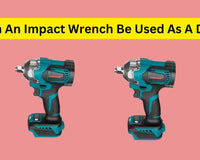
An impact driver is helpful in removing rusted bolts, installing license plates, and working on engine parts. Here, an impact driver helps because of its hammer mechanism. But for the highest torque needs like lug nuts or seized bolts, a dedicated impact wrench is better, since it delivers 200 to 1,000 ft-lbs of torque against 100 to 150 ft-lbs from an impact driver.
A cordless screwdriver is not suitable for automotive work. It does not have enough torque, and it has no impact mechanism to break loose stuck fasteners.
7. How to Choose the Right Tool for Your Project
Assess Your Primary Use Case
Think about what you do 70 percent of the time. Do not buy a tool for rare jobs.
- Mostly assemble furniture or install fixtures? Buy a cordless screwdriver.
- Mostly build decks, frame walls, or drive lag bolts? Buy an impact driver.
- Do both equally? Buy both, since they are complementary and cover almost every screw-driving task.
Consider Your Skill Level and Comfort
Cordless screwdrivers are easier to learn. The clutch does the work of limiting force, so you do not need to judge torque yourself. For beginners, a screwdriver is less likely to cause damage.
Impact drivers are louder and more aggressive. First-time users often overdrive screws before they learn to control the trigger. Start on a piece of scrap wood and practice at half speed before you work on real material.
Budget, Battery Platform, and Ecosystem
Battery compatibility matters a lot. If you already own tools from one brand, buying more from the same brand saves money. If you are starting fresh, factor in the cost of batteries and the charger. A bare tool impact driver may cost 60 dollars, but add a battery and charger, and the total is closer to 130 dollars.
8. Conclusion
A cordless screwdriver gives you steady, controlled force for small and precise jobs indoors. An impact driver gives you high power for long screws and tough materials outdoors. The two tools differ in how they work, not just in size or weight.
So, think about the jobs you do most. If it is furniture and fixtures, get the screwdriver. If it is decking and framing, get the impact driver. If you do both, buy both over time. Picking the right one for your main task will save you time, money, and damaged materials.
9. FAQs
Can a beginner use an impact driver safely?
Yes, but start on a low speed setting. Practice on scrap wood first. Wear hearing protection because the noise level is around 88 to 100 dB. The main risk for beginners is over-driving screws. Use the variable speed trigger gently until you get the feel for it.
Cordless screwdriver and impact driver, which tool is better for installing drywall?
Neither is ideal. A drywall screw gun stops the screw at the right depth automatically, which is the right tool for this task. But if you must choose between the two, a cordless screwdriver with a drywall dimpler bit is safer, since an impact driver will overdrive and break the paper face of the drywall.
Are brushless motors worth the extra cost for a cordless screwdriver and impact driver?
Yes, for regular use. Brushless motors last longer, run cooler, and give you 20 to 30 percent more runtime per charge. For 3 to 4 uses per year, a brushed motor is fine. For weekly use, the brushless model pays for itself. The cost difference is usually 30 to 60 dollars.
Can I use an impact driver bit in a cordless screwdriver?
Yes, if the bit has a hex shank and your screwdriver accepts hex bits. Most modern cordless screwdrivers do. But the other direction is not recommended. Do not use regular screwdriver bits in an impact driver for heavy work. They wear faster and can crack because they are not built for hammer blows.
How much torque do I actually need for home projects?
For furniture assembly and light mounting, 20 to 50 Nm (180 to 440 in-lbs) is enough. A standard cordless screwdriver gives this range. For deck building and lag bolts, you need 100 to 150 Nm (885 to 1,325 in-lbs). That is impact driver territory.
Cordless screwdriver and impact driver, which tool is quieter for apartment or condo use?
The cordless screwdriver is much quieter at around 70 to 75 dB. An impact driver produces 88 to 100 dB when the hammer fires. For context, hearing damage can start at 85 dB with extended exposure. So for apartment use with close neighbors, the screwdriver is the considerate choice.
Can I use a cordless screwdriver for drilling pilot holes?
Yes, if the model has a keyless chuck that accepts drill bits. Most cordless screwdrivers handle small pilot holes up to 1/4-inch in soft wood. But the motor is not built for heavy drilling. For frequent or large-diameter holes, use a dedicated drill.
How long do cordless tool batteries last before needing replacement?
Li-ion batteries last about 300 to 500 charge cycles, or 3 to 5 years with regular use. The biggest enemy is heat. Do not leave batteries in a hot car or direct sunlight. Partial charges are fine for Li-ion and do not shorten the lifespan.