
Whether you are assembling furniture, working on a cabin, or renovating, a good knowledge of the screwdriver will be very helpful. If you can master the use of an electric or cordless model, you can achieve a perfect, professional result. Without the appropriate skills, you can end up with a badly stripped screw that can be a headache to put right. Therefore, read this blog to avoid frustration and choose the right bit.
1. The Importance of Choosing the Right Screwdriver
Using the right screwdriver prevents damage and makes the job easier.
Prevents Damage
Using the wrong bit strips screw heads instantly. A stripped screw in hardwood will be difficult to remove. Therefore, there is no need to ruin your project. The right driver puts torque into the fastener, not into chewing up the metal. Don't strip it—grip it. Stay sharp.
Ensures Safety
A slipping driver can cause serious injuries and damage your workpiece. Matching your tool to the task keeps the energy moving in one direction. Using the correct screwdriver bit prevents it from jumping out of the slot. Control is very important here; stay safe and keep the pressure steady.
Enhances Precision
The right bit and torque setting drive every screw flush. You get the correct depth every time without leaving a raised head. This ensures a perfect fit for whatever you are mounting. So what if it takes a second to adjust because precision matters.
Increases Tool Longevity
Forcing mismatched bits into your chuck wears the tool down fast. Using the correct bit minimizes strain on the tool's internal components. The right tool, used correctly, simply lasts for years. Use the recommended settings for your equipment, and it will last longer.
2. Why Choose Electric and Cordless Screwdrivers Instead of Manual Screwdrivers?
You can drive screws by hand. Once you've used an electric or cordless screwdriver, returning to manual screwdriving feels unexciting.
Speed and Efficiency
Fifty screws into decking by hand is genuinely exhausting. An electric driver speeds up the process and delivers consistent results. You don't slow down at screw forty-seven the way your wrist does.
Less Physical Effort
Repetitive screwdriving can strain your wrist and forearm. A powered driver significantly reduces strain, especially during long workdays.
Consistent and Precise Torque
Electric screwdrivers provide consistent torque. The torque clutch disengages at a predetermined resistance level, ensuring that every screw is driven to the same depth. You simply cannot replicate that by hand, no matter how experienced you are.
Versatility and Convenience
A good electric screwdriver accepts a wide range of bits and often handles light drilling as well. One tool can handle multiple tasks.
Improved Productivity
Less time per fastener, less fatigue, fewer mistakes. This saves time on larger projects. A job that takes two hours by hand might take forty-five minutes with a decent cordless screwdriver.
Less Wear and Tear
It can reduce physical strain. It also reduces wear on your bits, as a powered driver applies torque more smoothly than the inconsistent pressure of manual work.
Better For Heavy-Duty Tasks
Driving long screws into hardwood by hand is brutal. An electric driver with the right torque setting handles it comfortably, where you'd be slipping and sweating with a manual.
3. What are Electric and Cordless Screwdrivers
What Is an Electric Screwdriver?
An electric screwdriver is a powered driver that runs off a direct wall connection. The motor drives your bit at a consistent speed, and most models include a torque clutch that disengages when a preset resistance is reached.
The features commonly found on most corded models include the following:
- A variable-speed trigger
- Torque-adjustment collar
- A forward/reverse switch
- and a hex chuck that accepts standard bits.
They're common in assembly environments where you're near a power source all day, and runtime is never a concern.
The problem with a corded design is that you're tethered. You move around a job site, you work overhead, you get into an awkward corner — and the cord becomes something you're managing instead of something helping you. The main limitation is the power cord.
What Is a Cordless Screwdriver?
A cordless screwdriver operates using a rechargeable lithium-ion battery. Generally, it comes with the tool, but you can get it separately. This battery is incorporated into the handle or attached to the base, allowing the driver to function like a traditional corded version. However, there is no hassle of cords, and you can work anywhere easily.
The best feature of a battery screwdriver is its flexibility. For example, you can work in various locations, be it a ladder, beneath a cabinet, or in tight spaces. Moreover, battery timing is excellent, which is another plus point. So there is no need to worry about losing power while you're working.
However, a downside is that you must keep an eye on the battery charge. For prolonged jobs, it is advisable to have a backup battery on hand.
Common Components and Terminology of Power Screwdrivers
- Handle
- Trigger
- Torque Settings
- Chuck
- Bits
The handle is where you grip the driver. Ergonomics here matters more than most people think. For instance, a poorly balanced handle causes fatigue surprisingly fast.
The trigger controls activation and, on variable-speed models, the rotation rate. Light squeeze for slow, full squeeze for fast. Press lightly for a slower speed and fully for a faster speed.
The torque settings are the numbered collar near the chuck. Higher numbers allow more torque before the clutch disengages. Lower numbers disengage earlier, which protects delicate materials and prevents you from sinking screws too deep.
The chuck grips the bit. On most screwdrivers, this is a hex chuck that accepts 1/4-inch hex shank bits with a push-and-click.
The bits are the interchangeable tips that engage the screw head. They're the most frequently replaced consumables you will replace most often, and keeping a good set on hand saves you a lot of frustration.
4. Preparing to Use Your Electric or Cordless Screwdriver
Selecting the Right Screwdriver Bit for Your Task
Choosing the correct bit is important, and it costs them every time.
- Phillips Bit
- Flathead Bits
- Torx Bits
- Hex Bits
Phillips is the cross-shaped bit. It is the most common in general construction and furniture assembly. They come in sizes PH0 through PH3, and using a PH2 on a PH1 screw is exactly how you strip a head before you've even started. Match the size.
Flathead bits fit slotted screws. You see these less in modern work, but they show up in electrical fixtures, older hardware, and some specialty applications.
Torx bits fit the six-pointed star recess you're seeing more and more on quality fasteners. The common examples are deck screws, automotive hardware, and premium cabinet fittings. They reduce slipping compared to Phillips bits.
Hex bits are quite good for flat-pack furniture and machinery—no need to struggle with a loose fit. For softwood or drywall, a Phillips bit is an excellent choice. But for hardwood, experts recommend switching to Torx to stop cam-out. However, you need to slow down and confirm the fit before starting.
Safety Precautions Before Use
1. Use Safety Glasses
Safety glasses are non-negotiable when driving screws, particularly overhead. Bits break, debris flies, and screws occasionally strip in a way that sends material somewhere unexpected. Always wear safety glasses.
2. Grip Gloves
Grip gloves are also important for safety. For sustained use, thin grip gloves protect against abrasion while maintaining your tactile sensitivity with the tool. Thick, padded gloves can impair control, which may affect your precision.
3. Maintain a Proper Posture
Maintain proper posture and align the screwdriver with the screw, not just for health reasons. Position yourself so your driving arm can push in a straight line along the screw axis. Driving at an angle applies lateral pressure on the bit, leading to cam-out and stripping the screw head. Keep your elbow reasonably close to your body so your whole arm absorbs the torque rather than just your wrist. And make sure your workpiece is secured before you start. A board that shifts mid-drive is dangerous and ruins the work.
Charging and Battery Care for Cordless Screwdrivers
The number one rule is to check that lithium-ion batteries are fully charged before using your cordless screwdriver. If you notice that it is not providing sufficient power, connect it to the charger to recharge. Store your tool at room temperature, since high heat can lower its capacity and reduce battery life. While you work, watch for any drop in torque or speed. If the motor feels warm during light tasks, it could mean the tool is under strain. Always check the battery indicator before you begin.
5. Step-by-Step Guide to Using an Electric or Cordless Screwdriver
Inserting the Correct Bit
On a hex chuck, pull the sleeve back and insert the hex shank until it seats. You will hear a click. Give it a light tug to confirm it is locked. If you risk a loose bit, it will fall out and damage your screw. Ensure the bit sits straight. A crooked bit wobbles, which accelerates wear on your screwdriver. Also, check it twice.
Setting Torque and Speed Settings
Start low on the torque collar and work up. It is far easier to add torque than to fix a screw you've driven too deeply into finished material. For drywall screws, you want the head to just dimple the paper face without breaking through it. For deck screws in treated lumber, you need considerably more torque to pull the head flush.
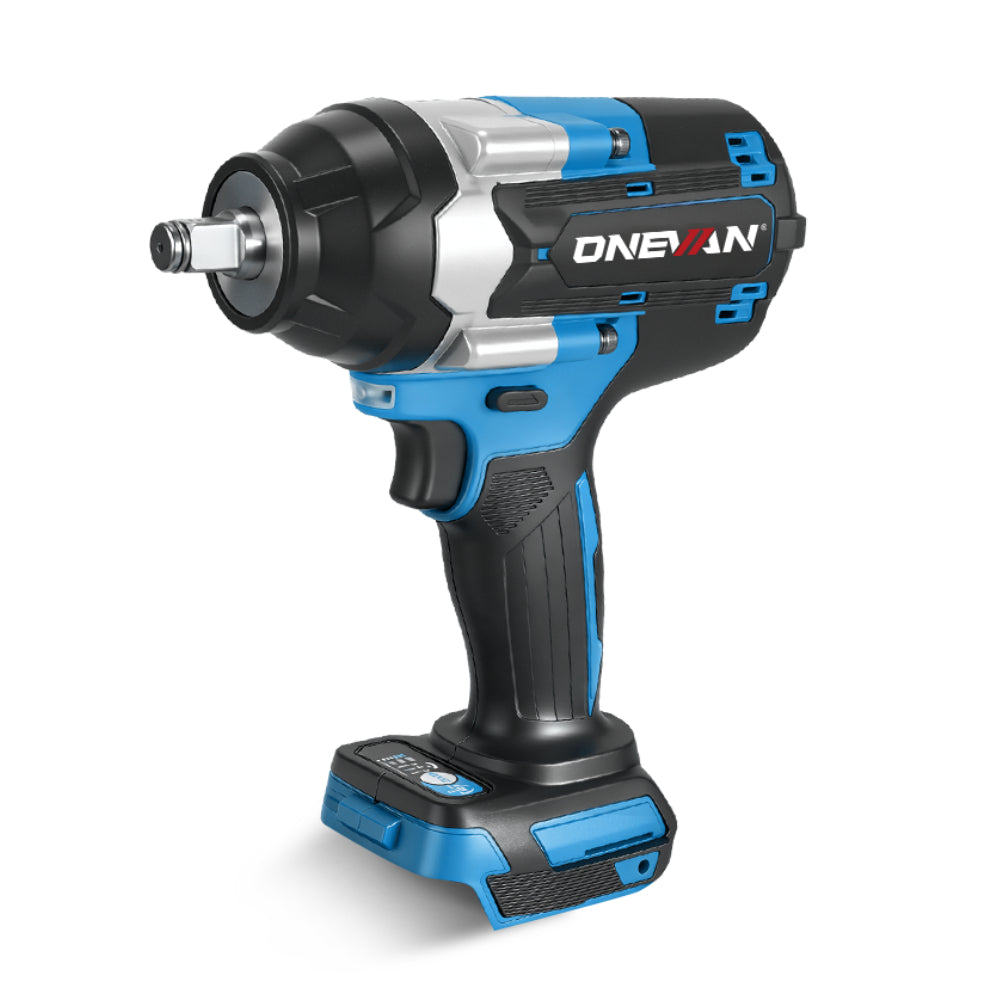
A driver like the ONEVAN cordless brushless screwdriver offers 21+2 torque settings, giving you real granularity. For example, the numbered positions adjust the clutch engagement, while the drill setting allows for uninterrupted rotation during drilling.
For speed, low speed gives you more torque and better control for driving screws. High speed is for drilling. If your driver has a variable trigger rather than speed settings, feather the trigger for delicate work instead of squeezing it fully.
Proper Technique for Driving Screws
Hold the driver with your dominant hand, thumb running along the side of the handle. Your grip should be firm but comfortable.
Align the bit with the screw head dead-on before you pull the trigger. Set the bit in the recess, apply light forward pressure to seat it, then squeeze. That forward axial pressure is what keeps the bit engaged with the screw as it turns. Without it, the bit rides up and out of the recess. That's cam-out, and that strips the screw head.
Start slow, especially with smaller screws or soft materials. As the screw bites and begins pulling itself in, you can bring up the speed. Near the end of the drive, ease off; that's when over-driving happens. Let the torque clutch do its job.
Removing Screws Safely
Switch to reverse before the bit touches the screw. There's a forward/reverse lever on all powered drivers, usually just behind or above the trigger. Set it while the tool is stopped, not mid-pull.
Use a slightly lower torque setting for removal than you used for installation. The screw is already seated, and you don't need much torque to break it free. Once it breaks free and starts spinning out, ease off so it doesn't eject suddenly.
For older or corroded screws, you may need to alternate between forward and reverse to break the corrosion bond. Don't force it because if the head starts giving way, stop and reach for an extractor bit instead.
6. Why Cordless Screwdrivers Are Often the Better Choice
Portability and Freedom of Movement
Working cordless means you follow the job. On a roof, under a deck, inside a vehicle, a cord becomes an active obstacle in these situations that a cordless screwdriver simply doesn't have. It genuinely affects your posture and angle of work, and therefore your results.
Battery Technology Advancements
Lithium-ion batteries have significantly improved the performance. This is the latest technology, which easily outperforms older nickel-cadmium tech in terms of power and lifespan. They also recharge faster. The gap between corded and cordless performance that used to be a real consideration is now, for most applications, negligible.
Versatility in Use Cases
A good cordless screwdriver handles furniture assembly, cabinetry, decking, electrical work, and automotive interior work without you reaching for another tool. Many models equipped with drill mode can also handle light drilling tasks, allowing you to use a single tool for multiple functions.
Additional Features Popular on Cordless Models
The LED light built into the nose may seem minor. However, when working inside a cabinet or in a dim crawlspace, it becomes invaluable as it allows you to see the screw head clearly.
Brushless motors are used in good cordless screwdrivers. Brushless motors are smooth. They kill vibration instantly because high vibration is not good for your arm. You will feel less tired after a long day of work. You might not notice it at first, but try an old, brushed tool afterwards. The difference is massive. Go brushless.
7. Common Mistakes to Avoid When Using Electric and Cordless Screwdrivers
Using the Wrong Bit Size or Type
A Phillips PH2 in a PH1 screw strips that head within one or two pulls. Using the wrong bit size can strip the screw head, so you don't want to stop and swap bits. Take thirty seconds. Keep a variety of sizes within reach rather than defaulting to whatever's already in the cupboard.
Applying Excessive Torque
Brute force is a project killer. Pushing too much torque into drywall doesn't just sink the head; it shreds the paper face and obliterates your holding power. On softwood, that extra twist acts like a wedge, splitting the grain instantly. You need to engage the clutch as it exists for a reason. Dial it back, run a quick test on a scrap piece, and only then commit to the real surface.
Neglecting Battery Maintenance (Cordless Models)
Leaving your battery at zero charge in a sweltering garage can severely damage the cells. Lithium-ion tech has proper safety protocols. Keep your gear at room temperature and do not let it completely dry. If you neglect the maintenance, you’ll be back at the hardware store buying a replacement far sooner than necessary.
Not Following the Manufacturer’s Instructions and Safety Rules
The manufacturer's manual is not merely supplemental; it contains crucial information for using the tool safely. It defines the maximum torque limits and the exact bit geometry required for safe operation. For example, using a light-duty driver on structural timber can damage the tool's motor. Understand the tool’s limits. Follow the guidelines to keep your hands intact and your warranty valid.
8. Conclusion
Mastering the cordless screwdriver is all about the synergy of preparation and technique. You need to focus on three areas:
- Selecting the perfect bit
- Dialing in the torque threshold
- And maintaining axial pressure
Modern brushless motors paired with high-capacity lithium-ion cells have rendered corded models nearly obsolete for daily tasks. The enhanced mobility of a cordless setup significantly improves your workflow efficiency.
9. FAQ
Can I use any bit with my electric or cordless screwdriver?
You can use any bit with a 1/4-inch hex shank, which is the standard across virtually all electric and cordless screwdrivers. It is important to use a bit that matches both the size and type of the screw head. A Torx bit won't help you with a Phillips screw, and a PH1 bit will ruin a PH3 screw head before you know what happened. Keep a full set of sizes in each type and confirm the match before you drive.
How do I know when to charge my cordless screwdriver battery?
The clearest sign is a noticeable drop in performance. For example, the tool will start turning more slowly or struggling with screws it was handling easily before. Most drivers also have an indicator light that changes or flashes when the charge is low. The rule with lithium-ion batteries is to charge before they completely die. These batteries last longer when you top them up rather than drain them fully each cycle.
Are cordless screwdrivers suitable for heavy-duty projects?
Quality cordless screwdrivers with brushless motors and sufficient voltage (12V or higher) such as ONEVAN, can handle most heavy-duty applications, including long structural screws into hardwood, decking, and cabinet installation. Where they reach their limit is in sustained high-torque work like driving hundreds of lag screws, where an impact driver becomes the more appropriate tool. For most heavy work you'd encounter in home improvement or general construction, a good cordless screwdriver is more than enough.
Can I use screwdriver bits in a drill?
Yes. Standard 1/4-inch hex shank bits fit into any drill with a standard chuck. You insert the bit the same way you would a drill bit. The consideration here is that drills typically don't have a torque clutch as refined as a dedicated screwdriver, so you have less control over driving depth and a higher risk of over-driving. For occasional screwdriving tasks, a drill works fine. For precision work or large quantities of screws, a dedicated driver with a proper clutch is the better tool.
Can you use a cordless screwdriver as a drill?
Many cordless screwdrivers feature a drill mode that bypasses the torque clutch for continuous rotation. When equipped with an appropriate drill bit, they can efficiently handle small holes in wood, drywall, and thin metal. What they won't do is replace a full drill for large-diameter holes, masonry work, or sustained heavy drilling. For instance, the motor isn't built for that sustained load. For occasional small holes in the course of a screwdriving job, though, a cordless screwdriver in drill mode works perfectly well and saves you from reaching for a second tool.