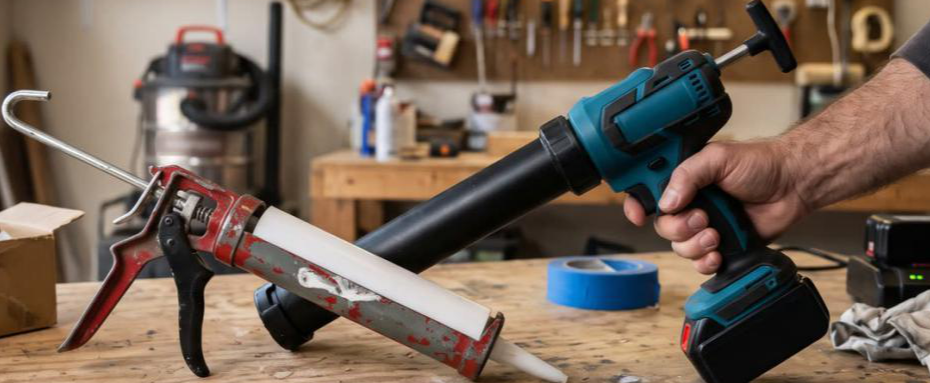
A caulking gun can feel intimidating for first-time users, especially if you’re not familiar with the technique. An uneven bead, too little pressure, a bursting cartridge, and sealant that oozes out of the nozzle and spills everywhere long after you stop pressing the triggers are all the problems that make a caulking gun a nightmare to use. Using a caulking gun isn’t always so painful, though. It can be pretty straightforward if you know what type of gun you need for your specific type of work. In this article, we will talk about how easy it is to use different types of caulking guns in different scenarios and use cases.
1. Is a Caulking Gun Easy for a First-Time User?
Using a caulking gun isn’t particularly difficult, but a first-time user will almost always need some guidance.
Can a Beginner Use a Caulking Gun Without Watching a Tutorial?
If you are about to use a caulking gun for the very first time, it’s best that you watch a tutorial first or get guidance from an experienced person. A manual caulking gun is just a metal frame in which you put the caulk cartridge and pull the trigger. But there are still some nuances you need to take care of. For example, you must use a nail or the gun’s seal puncture rod to pierce the inner foil seal at the back of the cartridge so that the pressure doesn’t rupture the cartridge. And on a more basic level, you need to understand which
caulking gun to use exactly, because guns have different thrust ratios and thicker sealants need a gun with a higher thrust ratio, so your hands don’t fatigue.
In case you are using a cordless electric caulking gun, like the ONEVAN 50mm Cordless Electric Caulking Gun you have fewer things to learn as it’s mostly automated, but you should still read the user manual to understand the charging, speed settings, and anti-drip function.
Is a Caulking Gun Easy Enough for Seniors or People With Arthritis?
Using a caulking gun isn’t very easy for seniors. If you’re a senior, your muscles can get fatigued faster, making it particularly difficult for you to apply thick sealants and perform longer, heavier tasks.
Using a manual caulking gun is almost never a good idea if you are a senior or have arthritis. You need a tool that requires very little effort from you while applying enough force to the sealant. Cordless caulking guns are a good option in this situation as they are battery-powered and do the job with just the click of a button. But cordless caulking guns are power tools, so using them to fix minor bathroom defects can be overkill.
2. Which Is Easier, an Electric or Manual Caulking Gun?
Electric caulking guns give you a smoother experience with the motor doing all the heavy work, but they are bulkier and heavier than manual caulking guns, which are essentially a light metal frame plus a trigger and plunger.
What’s the Price Difference Between Electric and Manual Caulking Guns?
You can buy the simplest manual caulking gun starting from $5, but I don’t recommend it, as the cheapest gun is always a pain to use. A decent manual caulking gun with a smooth rod costs around $15 to $25 and works best for most household and DIY use cases.
A cordless electric caulking gun typically ranges from around $60 to $180, with premium models higher. The price difference between a manual gun and an electric gun is huge, so mere “ease of use” doesn’t justify the price. However, an investment of over $100 does pay dividends if you are a professional or someone who needs a caulking gun every day, as it saves lots of your energy.
Which Caulking Gun Gives a Smoother, Cleaner Bead?
A smooth, clean bead depends on how smoothly the sealant comes out of the nozzle, which ultimately depends on a consistent force being applied to the tube, which in turn depends on the sturdiness of the tool body.
Electric caulking guns tend to provide a more consistent bead because the motor controls extrusion more steadily, though they are bulkier. In the case of a manual caulking gun, the bead depends on how consistently the sealant oozes out of the nozzle. If the tool lags, jams or gets stuck, it produces an uneven bead.
Which Caulking Gun Should a Beginner Buy?
Even though electric guns provide better performance, a beginner should go for a manual caulking gun, as electric guns are suited for professional-grade continuous work. A smooth rod manual caulking gun with a dripless spring mechanism costing $15 to $25 is best suited for regular home fixes or DIY ventures. You can always upgrade to an electric gun later if you start taking on bigger projects.
3. What’s It Like Using a Caulking Gun for Different Projects?
Using a caulking gun can be a completely different experience depending on the specific scenario and task.
Light Repairs vs. a Whole-House Job
Most people don’t use a caulking gun every single day. They need it for occasional fixes or DIY projects. For these people, a manual caulking gun is enough. They can just load the cartridge, apply the fix, and let the gun rest till they need it the next time.
On the other hand, if you are renovating or repairing your whole house and you need to use a caulking gun in dozens of places throughout the house, a manual caulking gun probably won’t be enough, as your muscles will get fatigued by squeezing the trigger repeatedly, especially if you already have low grip strength. For tasks spanning a full house, you should go for an electric caulking gun.
Using a Caulking Gun for Weekend DIY Fixes
If you are a DIY enthusiast and love to pick up a caulking gun to fix household repairs on a sunny weekend, a manual caulking gun is just the right tool for your enthusiasm. Just make sure you are buying the right specs, which include a thrust ratio of at least 12:1, a smooth rod, and a dripless spring mechanism. Don’t buy the cheapest ratchet caulking guns, as they do more harm than good.
Using a cordless caulking gun is too much for occasional household tasks, as the price difference is too high to justify occasional ease of use.
Using a Caulking Gun in a Small Apartment
A good caulking gun is just fine when used in small apartments. You can easily use a manual caulking gun to seal the gaps and cracks in your house, seal the joints between wall panels and floors, and seal around your bathtub. And since a manual gun is small, you can keep it in a drawer or under the sink if you don’t have a garage. A manual gun is also easier to fit into tight spots like behind the toilet or the corners of your bathtub, as cordless guns are longer because of the motor and battery.
Is a Caulking Gun Portable Enough for Patio, Garage and Outdoor Use?
Manual caulking guns are very portable. Cordless electric caulking guns are heavier, but they are still very portable, and you don’t need a power outlet nearby to use them. You can safely store them in a clean and dry place and take them out to use anywhere inside or outside your house. Just keep in mind that caulk gets thicker in cold weather, so it’s harder to push out of a manual gun in winter.
Can a Caulking Gun Handle Exterior Wall Sealing?
Exterior wall caulking requires high-viscosity sealants like polyurethane and silicone. To apply these agents, you need a caulking gun that’s strong enough not to bend under pressure. For external application, go for a caulking gun that has a thrust ratio of at least 18:1, or 26:1 for thick polyurethane, so that it can push out the high-viscosity sealant into a steady, smooth bead. If you have a lot of exterior walls to seal, a cordless gun like the ONEVAN Cordless Electric Caulking Gun with about 550 lb of push force will make it a lot easier.
One Big Project vs Several Small Fixes
If you go for a cordless gun for a big project, keep a spare battery charged so you don’t have to stop halfway through a wall. For several small fixes spread over months, you will be storing a half-used tube in between, so how you store it matters more than which gun you use.
4. Does a Caulking Gun Work After Sitting Unused for Months?
A stored caulking cartridge and gun can still work if you have stored them properly.Will the Caulk Left in the Caulking Gun Still Work After Months?
A stored caulking tube can still work fine after months only if you store it right. The key here is to completely seal the tip of the cartridge. If the sealant stays in contact with the air, it will harden internally, and the cartridge will become useless.
How Do You Stop Caulk from Drying Out in Storage?
Whenever you store the sealant, either cover it with the cap provided by the manufacturer or put a nail into the nozzle tip and wrap electrical tape or duct tape around the edge to make it airtight. You can then also put it in a sealable plastic bag. If it’s silicone, you can keep the bag in a freezer, and it will stay good for months, but don’t freeze latex or acrylic caulk, as freezing ruins it.
What If the Caulk Has Hardened After Storage?
If you are using a tube that has been stored for months and the gun isn’t squeezing out the caulk, the caulk has probably hardened and blocked the nozzle. In this case, you can pull out any nail or wire you placed in the tip, and any hardened caulk will come out with it as well. If it’s still not working, you can try removing the hardened caulk causing the obstruction yourself and see if the sealant starts flowing. If the hardening has been extensive and most of the caulk has hardened inside the tube, the cartridge can no longer be used and must be replaced.
5. Conclusions
A caulking gun is a great tool for fixing everyday cracks and gaps in the house, and using it isn’t as difficult as people think once you understand how to use it for your situation. For everyday household and DIY work, a manual caulk gun with a smooth rod and dripless mechanism is the sweet spot for most users. For extensive and professional-grade work, however, a cordless electric caulking gun is the right choice, as you need to apply almost no pressure to use it. If you are a senior with low grip strength or if you have arthritis, you should consider an electric caulking gun as well.6. FAQs
How Long Does a Cordless Caulking Gun Last on One Charge?
A battery-powered cordless caulking gun like the ONEVAN Cordless Electric Caulking Gun runs for up to 60 minutes of continuous use on one charge. Since the motor only runs while you press the trigger, you can comfortably handle extensive tasks with a single charge.
Are Cheap Caulking Guns Good Enough?
A regular caulking gun costing around $25 is fine for everyday use. However, you should avoid ultra-cheap $5 ratchet rod guns because they handle very little pressure and keep dripping caulk after you stop squeezing.
How Long Does a Caulking Gun Last?
The lifespan of a caulking gun totally depends on its build material. Cheap guns made of plastic or thin stamped steel last weeks to months, while guns built with sturdier material can last for over a decade. Battery-powered calking guns last five to ten years before their battery and motor start to wear out.
How Do You Stop a Caulking Gun from Dripping?
To stop a caulking gun from dripping, press the thumb release catch at the back of the gun immediately after you have finished running a line. This relieves the pressure inside the tube and stops the flow. Modern manual guns and electric guns feature dripless mechanisms that automatically pause the flow.
Why Won’t My Caulking Gun Push the Caulk Out?
If your caulk gun isn’t pushing the caulk out, the nozzle is most likely blocked by either the aluminum seal (if the cartridge is new) or hardened caulk (if the cartridge has been stored capless). Removing the obstruction will make the gun work again.
How Do You Load a Tube into a Caulking Gun?
To load a caulking tube into a gun, cut its nozzle at a 45-degree angle, puncture its inner foil using a poker wire, retract the plunger rod, and seat the tube inside the gun’s cradle.
Can You Use a Caulking Gun for Grout or Construction Adhesive?
Yes, you can use a caulking gun for grout and construction adhesive. But these materials have a very high viscosity, so you should use a manual caulk gun with a high thrust ratio or go for an electric caulking gun.
How Long Does Caulk Take to Dry After Using a Caulking Gun?
Drying times depend on the sealant type (e.g., silicone often cures within 24 hours under proper humidity; polyurethane may take 24–72 hours or longer)