In extreme winter, you must remove snow from your property regularly, and it is a difficult job if you do not have the right tool, right? So you start searching for the machine that will assist you, and you read two terms: snow blower and snow thrower. These words are often considered identical, and even some companies become confused.
However, you will notice a major difference between a snow blower and a snow thrower. It is good to learn this difference so you can purchase the right machine during snowfall. Subsequently, you will be able to select a snow blower and a snow thrower based on the area you want to clean and your personal requirements.
This guide will describe each machine, how it operates, and what it can do. After reading this, you will be sure which tool is suitable for you. You will find that what some people call a snow thrower is usually a smaller, simpler, single-stage machine, while a snow blower typically has two or three stages and is larger.
1. What is a Snow Blower and a Snow Thrower, and How Do They Work?
You must know the purpose of a snow blower and a snow thrower. Both machines are the same: they push the snow out of the place you do not want. Their main difference is in how they collect and remove snow.
What Is a Snow Blower?
A snow blower usually means a big, powerful machine designed for heavy snow, long driveways, and deep snow piles. You typically see these machines in two main types: two-stage and three-stage.
What a Snow Blower Is and How It Works
A snow blower is a machine that has several stages of snow removal. To begin with, you need to be familiar with the prominent parts. On the front of the snow blower is a sharp metal auger with teeth. This is a difficult part that will cut through bulky snow. The snow is gathered by the auger and forced back into the machine.
Next, there is the second stage. Here is where the machine should perform as a blower. The main body contains a high-speed fan, known as an impeller. This fan picks up the snow on the auger and expels it through the discharge chute with great force. This two-step system allows the snow blower to work with much more snow and heavier snow than a snow thrower can. Snow blowers with two or three stages are typically gasoline-powered, though corded and cordless models are emerging.
When to Use a Snow Blower and How Much It Can Handle
You will find that a snow blower works best for big areas. You should use a snow blower if you have a long, wide driveway and a property that gets heavy, frequent snowfall. If your driveway is gravel, use only models designed for such surfaces to avoid damage or injury. You can use them for cities and commercial areas. Most two- and three-stage snow blowers can clear wide paths, usually 24 to 32 inches wide. They can handle snow up to 16 inches deep and throw snow 30 to 50 feet.
What Is a Snow Thrower?
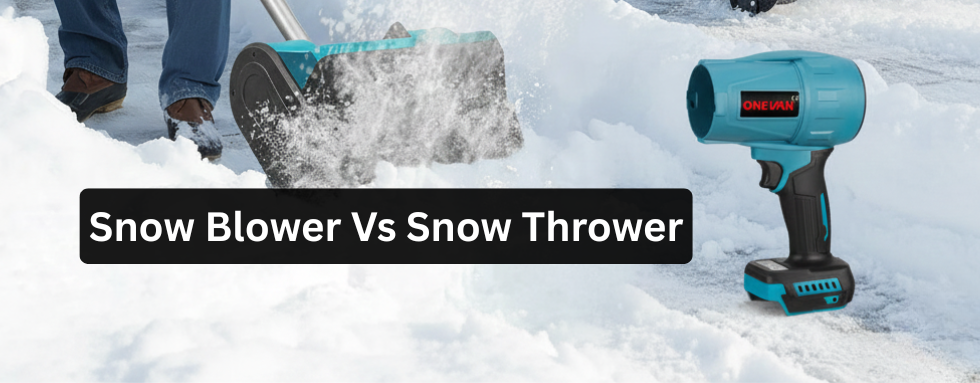
A snow thrower is a simpler, smaller machine. It is made for faster, lighter jobs and often runs on electricity, which makes it easier to move around. This type often includes popular cordless snow shovels, such as the ONEVAN Cordless Snow Shovels.
What a Snow Thrower Is and How It Works
The snow thrower works using just one part. You start with one auger, generally of rubber or plastic, which collects the snow and forces it out of the discharge chute. A snow thrower is a single-stage machine because only the auger performs both functions. Because the auger contacts the surface, these snow throwers should be used only on smooth surfaces such as pavement, concrete, or wooden decks. They do not work well on gravel because they can pick up and toss the rocks.
Then, as the auger turns, it moves the snow. The snow is pushed down the chute by the auger’s rotational rate. Cordless electric snow throwers, such as the ONEVAN models, are generally light and feature powerful, effective, and quiet brushless motors. This construction renders them adequate snow-clearing equipment in light to medium snowfalls.
When to Use a Snow Thrower and How Much It Can Handle
A snow thrower should be used to clear small portions and light snow. You can also clean flat driveways, patios, decks, and sidewalks. A cordless model, such as the ONEVAN Cordless Snow Shovel, can quickly clear a moderate amount of snow. Most snow throwers are designed to handle depths of 6 to 8 inches. They can toss snow up to 25 feet, making them exceptionally useful at home.
2. Important Differences Between Snow Blower and Snow Thrower
Understanding the fundamental differences in how they work helps you see why each machine is suitable for different jobs.
Mechanism and Components
The primary difference between a snow blower and a snow thrower is how the snow flows. First, a thick metal auger rips into the snow, often serrated for extra shredding, and shoots it back. A second, independent, high-speed impeller scoops up this snow and blows it out the adjustable chute in a whirlwind of brute force. As a result, you get excellent throw distance and power. Snow throwers, on the other hand, have only one stage. A single motor powers all its parts. The collection and discharge are accomplished by a single auger constructed of rubber or plastic. The auger touches the ground to clear it, so you have to steer clear of gravel. This action gives less power, and the throw is short.
Size and Power
The difference in mechanism naturally leads to differences in size and power. Generally, they incorporate gasoline engines ranging from 200cc to over 400cc. Snow blowers require significant storage space and often feature self-propelled wheels to help you move them. Consequently, they are best for major, high-volume snow removal, such as commercial lots or long country driveways.
Snow throwers, on the other hand, are significantly smaller. They often rely on cordless electric power with potent brushless motors. For example, the ONEVAN snow shovels are extremely light, frequently weighing less than 20 pounds. This compactness is excellent for maneuvering in tight spaces, like deck stairs and narrow walkways.
Snow Handling Capacity and Types of Snow Cleared
The most important distinction for you is the ability to handle different types of snow. Snow blowers are good at high-volume work. They can easily tackle deep snow, often up to two feet high. You will find that the powerful engine and metal auger make it easy to clear heavy, wet, and icy snow. This is possible because the impeller keeps the discharge chute clear.
Meanwhile, Snow throwers have a limit on the depth of snow they can handle, typically around 6 to 8 inches. While they work well in light, fluffy powder, you will find that single-stage throwers struggle significantly with heavy, wet snow. For example, the snow will stick to the auger, blocking the chute and forcing you to stop often to clear the obstruction.
Portability Differences
Portability is a major factor when you consider where you use and store the machine. Snow blowers are heavy and awkward. Even self-propelled models require considerable effort to turn and maneuver, and they demand a large garage for storage. On the other hand, the snow thrower is inherently much easier to move around.
The lightweight design of cordless models makes them easy to lift and carry. Furthermore, many modern snow throwers, like the ONEVAN products, are cordless. Using battery power, you can move around your property more easily without worrying about extension cords or gasoline engine exhaust. If you need long-term power, just prepare two more fully charged lithium batteries.
User Skill Level and Operation Complexity
You need to think about how easy the machine is to use and maintain. A snow blower is a complicated machine. It features multiple gears, drive controls, and chute handles and requires detailed engine maintenance, including checking oil and spark plugs. The learning process for a snow blower takes more time because you must manage the power, speed, and snow discharge simultaneously.
Alternatively, a snow thrower is much simpler. Many cordless electric models feature a simple push-button start and a dual safety switch to prevent accidents. You only need to keep the auger clean and ensure the battery remains charged. This makes the learning curve much easier.
Ergonomics and Storage Requirements
Considering how the machine interacts with your body and your home is important. Snow blowers are large, fixed machines. Their substantial size rarely changes, which makes storage difficult in smaller garages. You must be prepared to dedicate significant space. Snow throwers are excellent for convenience in storage. Many modern cordless snow shovels feature adjustable handles for better user comfort. Furthermore, models like the ONEVAN Cordless Snow Shovel often include a foldable design. This allows you to store the unit compactly between uses. You can easily hang the lightweight unit on a wall or store it in a small closet.
3. How to Choose Between a Snow Blower and a Snow Thrower
Now that you understand the differences, follow these steps to determine which snow removal tool best meets your needs.
Consider Your Typical Snowfall Conditions
Start by learning about the weather in your area. Do you usually get light snowfalls of 2 to 4 inches, or do you often have to deal with heavy, wet snow?
Pick a snow thrower if your area only gets light snow a few times each winter. A cordless snow thrower can make clearing easier. If you often face deep, heavy snow over 8 inches, a snow blower is a better choice.
Assess the Size of Your Driveway or Walkway
Next, you should measure the area you need to clear. This directly affects the power and runtime you need. For a small, single-car driveway and a sidewalk, a snow thrower gives more than enough power and saves you a lot of money. For long, double-wide driveways, the power and speed of a snow blower are often necessary for efficient snow removal. Using a snow thrower on a large property would require too many battery charges and take too much time.
Evaluate Power and Capacity Requirements
If you need to move hardened snow banks, you should select a robust gasoline-powered snow blower. Make sure the model you select has sufficient horsepower for removing thick, compacted snow. Additionally, if maneuverability and quick operation are priorities, consider a snow thrower.
Ease of Use and Maneuverability
If you have difficulty with movement or just want the simplest possible operation, this is a very important factor. When you want something easy to use, choose a snow thrower. They are portable and easy to ignite. You do not need to pull a cord or operate a heavy machine. Conversely, snow blowers will be more difficult to move, but are self-propelled.
Maintenance and Storage Needs
You have to consider what you will keep and where you will store the cordless snow throwers. Snow blowers require annual servicing, including changing the oil, replacing spark plugs, and treating the fuel. They also require much storage space. By contrast, snow throwers, especially electric ones, require much less maintenance, primarily battery care and auger cleaning. Many cordless models, such as the ONEVAN models, can be folded for easy, compact storage.
Budget Considerations
You should have a budget in place and then go shopping. You will discover that snow blowers are much more expensive than snow throwers. Snow blowers are also more expensive to operate, especially the high-end two- and three-stage models, due to fuel and maintenance costs. In contrast, snow throwers have much lower initial investment and maintenance costs.
Safety Features and User Comfort
The first consideration when selecting a tool should be safety and comfort. Snow blowers can be heavy machines with large, fast-moving parts, so you must use them with caution. The snow blowers, particularly the cordless electric models, are quiet and produce less vibration. Many models include safety switches that require two hands to operate, reducing the risk of accidental starts.
Gas vs. Electric Models
If you need the most power and longest runtime, choose a gasoline-powered snow blower, as it can clear large volumes of heavy snow from expansive areas. But gas machines are loud. They make smelly smoke. You must buy petrol often. If noise reduction is a priority, select an electric model. It produces no exhaust and requires minimal maintenance. You can also get a corded or cordless model. The ONEVAN Cordless Snow Shovel is a great electric one. It is quiet and works well.
Long-Term Durability and Reliability
You must think about how long the machine will last. The most robust snow blowers are two-stage models made from durable steel and other long-lasting materials. They have strong motors. With proper maintenance and timely repairs, these machines can last for many years. Snow throwers, which often have more plastic components and rely on battery quality, may not have as long a lifespan as larger snow blowers, but can still provide reliable service when maintained.
4. Conclusion
You have to choose what matters: power and capacity, or ease of movement and simplicity of use. A snow blower is a large, powerful machine designed for deep, heavy snow in large areas, while a snow thrower is typically lighter and suitable for moderate snow depth. It is easy to use for paths and small drives. The ONEVAN Snow Shovel is one example. Look closely at how much snow you get. Then you can pick the best machine and let it make clearing snow easier for you.
5. FAQs
Can snow throwers handle heavy, wet snow as well as snow blowers?
No, snow throwers cannot handle heavy, wet snow as well as snow blowers. Snow throwers work in a single stage, and the sticky nature of wet snow can easily clog the auger and chute, forcing you to stop often to clear blockages. Snow blowers use a powerful, two-stage system with a separate, high-speed impeller to forcefully shoot snow out, helping resist clogging and handling dense, heavy snow much better.
Are cordless snow throwers less powerful than snow blowers?
Yes, cordless snow throwers are usually less powerful than traditional gasoline snow blowers. While cordless models like the ONEVAN Cordless Snow Shovel use efficient brushless motors, they are made for lighter jobs, usually clearing paths 12 to 16 inches wide and snow depths up to 6 INCH. Snow blowers are built with high-horsepower engines for maximum clearing ability.
Can snow throwers be used safely on icy surfaces?
You should be careful when using snow throwers on icy surfaces. The rubber auger of a single-stage machine contacts the ground, potentially causing the machine to slip on slick ice. Snow blowers are often self-propelled and use deep-tread tires or tracks, giving you better grip and control on icy ground.
How noisy are snow blowers compared to snow throwers?
Snow blowers are much noisier than snow throwers. Gasoline engines make a lot of noise and produce a lot of exhaust. On the other hand, electric snow throwers, especially cordless models like those from ONEVAN, are built for quieter operation. You will find that electric models are much more pleasant to use, especially early in the morning.
Which is better for residential use, snow throwers or snow blowers?
The better choice depends completely on your home and climate. If you have a small driveway, a sidewalk, and get medium snow (less than 8 inches), a portable snow thrower is the better, cost-effective choice. If you have a long or steep driveway, or always face deep, heavy snow, you will need the power and ability of a snow blower.
Do snow throwers require less storage space?
Snow throwers need less storage space. They are compact and lightweight, and many models feature a foldable design or a hinged shaft for easy, compact storage. Snow blowers are large and heavy, and they cannot be folded, so they need a dedicated area in a garage or shed.
Are snow blowers more expensive to operate?
Snow blowers are more expensive to operate over time. They need routine engine maintenance, including oil changes, spark plug replacements, and other services. Snow throwers, especially electric models, require very little maintenance. You only need to account for the cost of charging the battery.