El día de esquila es agotador, y una vez que terminas con la última oveja, limpiar tus esquiladoras es probablemente lo último en lo que piensas. Pero este hábito es crucial para el rendimiento de tus esquiladoras la próxima vez.
Las cuchillas se desafilarán si te saltas la limpieza varias veces. Descubramos las mejores formas de limpiar las esquiladoras y eliminar el óxido y la grasa. Funciona tanto para esquiladoras con cable como para esquiladoras inalámbricas para ovejas.
1. Por qué necesitas limpiar tus esquiladoras de ovejas
La lana no es solo una fibra. Viene cargada con lanolina, suciedad y sudor seco. Cada sesión de esquila fuerza la lanolina, la suciedad y el sudor seco a entrar en las cuchillas y las rejillas del motor. Con el tiempo, se acumulan.
Las cuchillas se desafilan antes de lo que deberían. El metal comienza a corroerse. El motor se esfuerza en cada corte. Eventualmente, tus esquiladoras tendrán dificultades para cortar la lana limpiamente y podrían incluso tirar de ella.
Esto es malo para las ovejas y malo para tu equipo. La limpieza regular previene la aparición de estos problemas. Esto es lo que la limpieza constante hace por tus esquiladoras.
2. Beneficios de la limpieza regular de las esquiladoras de ovejas
- Prolonga la nitidez de las cuchillas y la vida útil de la herramienta: La lanolina y los residuos entre las cuchillas las desgastan rápidamente. Es esencial limpiar estos residuos regularmente para mantener la nitidez de las cuchillas con el tiempo.
- Previene la corrosión: La humedad provoca óxido. La lana y la suciedad retienen la humedad directamente contra el metal. Debes lubricar la herramienta ya que crea una barrera entre el metal y la humedad. El óxido no tendrá la oportunidad de crecer.
- Mejora el rendimiento y la seguridad: Las cuchillas sucias pueden sobrecalentarse y provocar cortes irregulares debido al aumento de la fricción y la resistencia. Arruinan la lana en lugar de hacer un corte limpio. Las cuchillas limpias realizan cortes precisos y son más seguras.
3. ¿Con qué frecuencia debes limpiar tus esquiladoras de ovejas?
La frecuencia de limpieza depende de la cantidad de ovejas que esquilas. Una operación con un gran rebaño tiene necesidades diferentes a las de alguien con una pequeña instalación en el patio trasero. Pero hay tres intervalos de limpieza que cubren la mayoría de las situaciones.
Después de cada sesión de esquila (limpieza diaria)
Cada uso requiere al menos una limpieza básica. Cepilla la lana, limpia las cuchillas y aplica una ligera capa de aceite. Cinco minutos de trabajo te ahorran problemas mayores más adelante.
Limpieza profunda después de un uso intenso o prolongado
Después de un largo día de esquila, ve más a fondo. Desmonta las cuchillas, limpia cada pieza por separado y revisa las rejillas del motor en busca de lana apelmazada. De paso, revisa las cuchillas para ver si están desgastadas.
Mantenimiento periódico según las directrices del fabricante
El manual de tu esquiladora tendrá un programa de servicio recomendado. Síguelo, ya que mantiene la esquiladora segura y afilada. También protege tu garantía.
4. Herramientas y materiales necesarios para limpiar las esquiladoras de ovejas
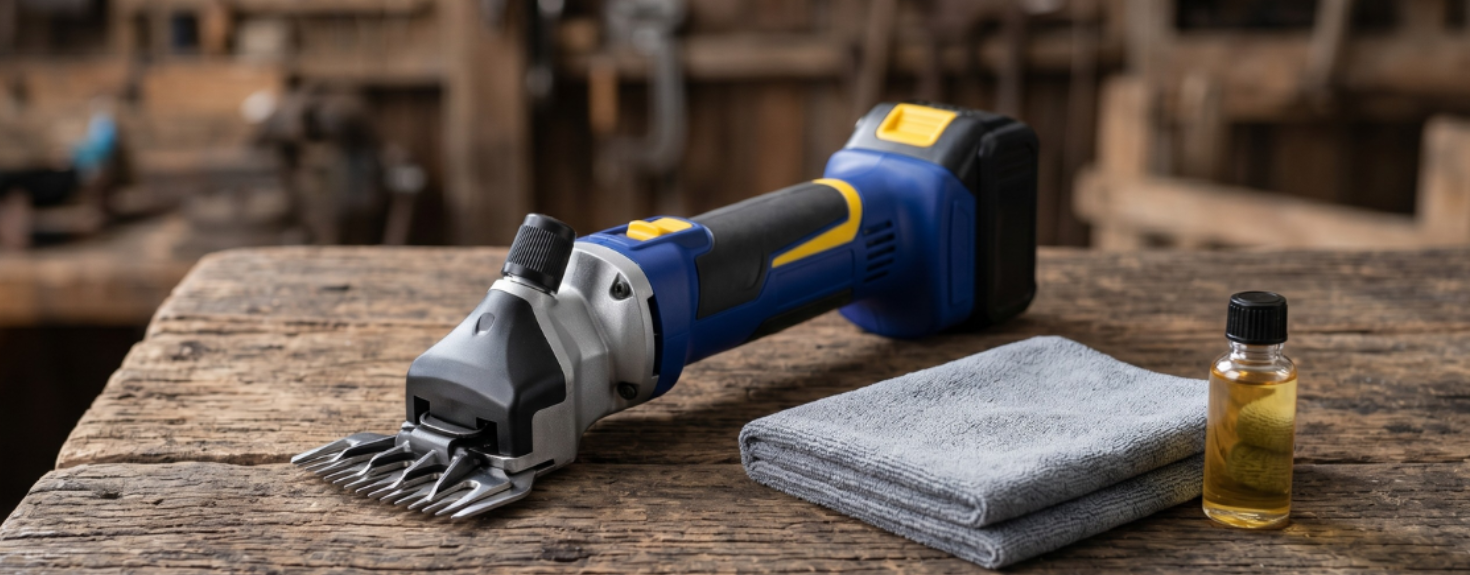
Detenerse a mitad de camino para buscar un cepillo o aceite te retrasa y corres el riesgo de omitir pasos. Primero, reúne todas las herramientas. La mayoría de lo que necesitas ya está en la granja o es fácil de conseguir en cualquier tienda de suministros agrícolas.
Herramientas y materiales esenciales:
- Cepillo de limpieza: Un cepillo pequeño de cerdas duras o un cepillo de dientes para eliminar lana, suciedad y residuos de las cuchillas.
- Aceite o lubricante para cuchillas: Aceite para cortadoras especialmente formulado para mantener las cuchillas funcionando suavemente y prevenir el óxido.
- Paño o trapos: Para limpiar el exceso de suciedad y aceite.
- Destornillador o llave hexagonal: Dependiendo de tus esquiladoras de ovejas, es posible que necesites esto para quitar o ajustar las cuchillas durante la limpieza.
- Aire comprimido o soplador (opcional): Para expulsar la suciedad fina de las áreas de difícil acceso entre las piezas.
- Spray desinfectante: Para desinfectar las cuchillas y reducir el riesgo de propagación de infecciones entre animales.
Tener todos estos elementos preparados antes de comenzar a limpiar puede hacer que el proceso sea más rápido, seguro y efectivo.
5. Suministros comunes de limpieza para esquiladoras de ovejas
- Paños suaves o cepillos: Un cepillo de cerdas duras saca la lana apelmazada. Un paño más suave se encarga de la limpieza final.
- Aceite ligero para máquinas: Esto es innegociable. Lo necesitas después de cada limpieza.
- Detergente suave: Elimina la lanolina y la grasa de la superficie de la cuchilla.
- Alcohol desinfectante: Desinfecta las herramientas para su uso en diferentes animales.
- Destornillador pequeño: Lo necesitas para una limpieza profunda adecuada.
6. Suministros adicionales para esquiladoras inalámbricas de ovejas
Una esquiladora inalámbrica de ovejas necesita un par de elementos adicionales. Son fundamentales para proteger la batería y el motor.
- Cargador de batería: La batería debe estar llena antes de guardarla. Una batería almacenada descargada tiene una vida útil más corta.
- Aire comprimido: Las fibras de lana pueden acumularse dentro de las rejillas del motor, obstruyendo el flujo de aire. Un cepillo por sí solo no siempre las eliminará. El aire comprimido las limpia correctamente.
7. Proceso de limpieza paso a paso para esquiladoras de ovejas (con cable e inalámbricas)
Aquí tienes un plan completo para limpiar las esquiladoras de ovejas. Sigue todos los pasos porque cada uno importa. Esto es adecuado para esquiladoras con cable y esquiladoras de ovejas a batería.
Paso 1: Precauciones de seguridad al limpiar las esquiladoras de ovejas
Las cuchillas de esquilar son afiladas. Cortan lana gruesa sin esfuerzo y te cortarán los dedos con la misma rapidez. Asegúrate de que las esquiladoras estén completamente apagadas. No asumas que el bloqueo del gatillo es suficiente. El lado afilado de la cuchilla debe estar en el lado opuesto a tus manos.
Paso 2: Preparación para la limpieza de las esquiladoras de ovejas
Debes preparar el espacio antes de comenzar el trabajo. Te lo agradecerás cuando no estés buscando un tornillo pequeño en el suelo.
Quitar la corriente:
- Esquiladoras con cable: Desenchufa de la pared. Apagar no es suficiente.
- Esquiladoras inalámbricas: Retira la batería antes de hacer cualquier otra cosa.
Coloca las tijeras sobre una superficie estable. Un banco de trabajo es ideal. Una toalla doblada sobre una mesa también funciona bien. Solo necesitas algo sólido donde las piezas pequeñas no se deslicen.
Paso 3: Eliminar la lana y los residuos de las esquiladoras de ovejas
Usa un cepillo de cerdas duras para frotar suavemente los dientes de la cuchilla. Elimina los residuos de la herramienta. No los empujes más adentro. Trabaja alrededor del punto de pivote y entre los dientes del peine. Esos puntos acumulan la mayor cantidad de lana compactada. Debes sacudir las esquiladoras para eliminar cualquier residuo.
Paso 4: Limpiar las cuchillas de las esquiladoras de ovejas
Tu siguiente tarea es pasar las cuchillas de tus esquiladoras de ovejas bajo agua caliente limpia y comenzar a lavarlas. Después de limpiar los residuos, vuelve a limpiar adecuadamente las superficies de tus cuchillas. El proceso de limpieza varía ligeramente según el tipo de esquiladoras que estés utilizando.
- Esquiladoras con cable: Empapa un paño en agua jabonosa suave o limpiador de cuchillas y limpia a fondo las cuchillas. Para lanolina muy apelmazada, es aconsejable sumergir las cuchillas en agua caliente durante unos minutos primero. El calor afloja la grasa existente y facilita su eliminación. Enjuaga con agua limpia después.
- Esquiladoras inalámbricas: Limpia con un paño húmedo y limpiador de cuchillas en lugar de sumergir en agua. Evita que el agua entre en la carcasa del motor y en los puntos de conexión de la batería. Limpia cada diente de la cuchilla con un trapo o cepillo de dientes.
Paso 5: Secado de las esquiladoras de ovejas
No te apresures en este paso. Una vez que la humedad se seca, se concentra como óxido. Desinfecta cada pieza con un trapo limpio. Concéntrate en los dientes de la cuchilla y el área cerca del peine.
Después de lubricarlas, debes dejar las esquiladoras en tu banco durante 10 a 15 minutos para que se sequen al aire antes de volver a ponerlas en servicio. Acelera el proceso utilizando aire comprimido.
Paso 6: Lubricación de las esquiladoras de ovejas
El engrasado es, con mucho, uno de los pasos más importantes de todo el proceso, y el que más tendemos a apresurar. Pasa ligeramente una línea de aceite para cuchillas por el borde superior de los dientes del peine. Pon en marcha las esquiladoras durante unos diez segundos para que el aceite llegue a todos los puntos de contacto.
Retira el exceso con un paño para que no gotee sobre la lana la próxima vez que trabajes. Usa aceite para cuchillas de alta calidad o aceite ligero para máquinas específicamente diseñado para herramientas de esquila. Los aceites de cocina pueden enranciarse con el tiempo, lo que puede dejar residuos que atraen la suciedad y afectan el rendimiento. Las partes móviles se atascan con grasas pesadas. Ninguno de los dos vale la pena el riesgo.
Paso 7: Limpiar el cuerpo de las esquiladoras de ovejas
El cuerpo de las esquiladoras también acumula lana y polvo. Límpialo correctamente mientras todo ya está desmontado.
- Esquiladoras inalámbricas de ovejas: Usa aire comprimido en las rejillas del motor. Las fibras de lana se compactan y bloquean el flujo de aire. Cuando el flujo de aire está bloqueado, el motor se calienta durante tu próxima sesión, lo que acorta su vida útil. Usa un paño para limpiar la cubierta exterior.
- Esquiladoras de ovejas con cable: Limpia todas las partes de la esquiladora con un paño húmedo. No debe estar demasiado mojado. Pasa los dedos por las cuchillas para sentir grietas o deshilachados.
Paso 8: Volver a montar y probar
Es hora de volver a montar la herramienta. También debes comprobar si tu esfuerzo ha dado resultados fructíferos. No puedes dejarlo si no funciona. Coloca las cuchillas en su forma y asegúrate de que estén ajustadas.
- Esquiladoras de ovejas con cable: Vuelve a enchufar y enciende durante unos quince segundos. Solo escucha. Debe ser suave y uniforme. No debes escuchar ningún sonido inusual durante el funcionamiento.
- Esquiladoras de ovejas inalámbricas: Vuelve a colocar la batería y enciende. Debe funcionar durante unos segundos. Comprueba el movimiento de las cuchillas porque debe ser consistente.
8. Cómo eliminar manchas, óxido y residuos difíciles de las esquiladoras de ovejas
Una limpieza regular de tus esquiladoras inalámbricas de ovejas ONEVAN mantiene la mayor parte de la acumulación bajo control. Pero a veces sacas un juego de esquiladoras que estuvieron en el cobertizo todo el invierno o se mojaron y no se secaron correctamente. Esa es una situación diferente. El barro, los residuos secos acumulados y las áreas oxidadas requieren más cuidado que una simple limpieza. Afortunadamente, la mayor parte se quita fácilmente mucho antes de que haya tenido demasiado tiempo para secarse o endurecerse.
9. Identificación del tipo de suciedad o manchas de esquiladoras de ovejas
Examina con qué estás trabajando realmente antes siquiera de elegir un producto de limpieza en particular. Usar el producto equivocado para la cosa correcta es una pérdida de tiempo y puede dañar la cuchilla.
- La acumulación de lana se ve como bolas de fibras prensadas alojadas en las encías de la cuchilla. Puedes verlo después de pasar un cepillo.
- La grasa es una capa espesa y pegajosa de color amarillo-marrón. Principalmente lanolina seca mezclada con polvo que se ha cocido con los años.
- Las manchas naranjas o rojizas, llamadas óxido, suelen aparecer en lugares donde has empapado el metal con agua y nunca lo has secado.
10. Técnicas para eliminar residuos de lana y grasa de las esquiladoras de ovejas
El agua caliente es tu mejor herramienta aquí. Descompone rápidamente la lanolina y te ahorra mucho tiempo de fregado. Aquí tienes la guía paso a paso para mostrar cómo eliminar los residuos de lana y grasa:
- Llena un recipiente con agua muy caliente.
- Sumerge solo la sección de la cuchilla durante dos o tres minutos. Las partes del motor y la batería no deben tocar el agua.
- Retira las cuchillas y frótalas con un cepillo. La grasa se desprende fácilmente ahora.
- Enjuaga con agua limpia.
- Seca completamente con un paño y deja secar al aire durante diez minutos.
- Aplica una capa de aceite.
Puedes usar jabón lavavajillas con agua caliente para eliminar la grasa pesada. Corta la lanolina más rápido que el agua sola.
11. Métodos de eliminación de óxido para esquiladoras de ovejas
El óxido temprano se quita sin mucho problema. No debes dejarlo por mucho tiempo porque arruina la cuchilla. Aquí tienes la guía paso a paso para mostrar los métodos de eliminación de óxido para esquiladoras de ovejas:
- No trabajes con cuchillas húmedas porque pueden contribuir al crecimiento del óxido.
- Frota papel de lija sobre la zona oxidada para eliminarlo. Siempre muévelo en línea recta en lugar de en círculos.
- La gente a menudo usa un producto quitamanchas si el óxido es demasiado fuerte. Asegúrate de que sea seguro para las cuchillas de corte de metal. No lo dejes por mucho tiempo.
- Usa un paño seco para limpiar la zona.
- Aplica aceite protector para cuchillas inmediatamente. El metal desnudo puede corroerse de nuevo si descuidas este paso.
12. Conclusión
Unas tijeras limpias cortan mejor y duran más. Si buscas tijeras fáciles de mantener y diseñadas para el trabajo real en la granja, ONEVAN tiene una sólida gama que vale la pena considerar. Nuestras tijeras inalámbricas para ovejas están diseñadas para soportar un uso intensivo sin que sea un problema limpiarlas y mantenerlas. Cuida tus herramientas y te acompañarán en cualquier temporada de esquila.
13. Preguntas frecuentes
¿Puedo usar limpiadores domésticos en las esquiladoras de ovejas?
Puedes usar un jabón lavavajillas suave para las esquiladoras de ovejas. Abstente de usar lejía o aerosoles a base de amoníaco, ya que arruinan las cuchillas.
¿Cómo evito daños por humedad al limpiar?
Limpia las cuchillas después de la limpieza. No permitas que permanezcan mojadas, ni siquiera por un breve período. Sigue la limpieza con un paño con una capa de aceite para cuchillas para prevenir la formación de óxido.
¿Qué tipo de aceite es mejor para lubricar las cuchillas?
Aceite ligero para máquinas o aceite específico para cuchillas. Nunca debes usar aceite de cocina en tus tijeras. Son pegajosos y atraen aún más suciedad.
¿Puedo desmontar las esquiladoras inalámbricas de ovejas para limpiarlas?
Sí, la mayoría de las esquiladoras inalámbricas de ovejas te permiten quitar las cuchillas. Saca la batería primero, siempre. Luego, sigue los pasos de tu manual. Mantén el agua alejada de la carcasa del motor y de los terminales de la batería durante toda la limpieza.
¿Con qué frecuencia debo reemplazar las cuchillas de la esquiladora?
Depende de cuánto las uses. Una operación con mucho trabajo puede necesitar reemplazar un juego de cuchillas cada temporada. Si manejas un rebaño más pequeño y limpias tus esquiladoras correctamente después de cada uso, las cuchillas de alta calidad pueden durar de dos a tres temporadas.