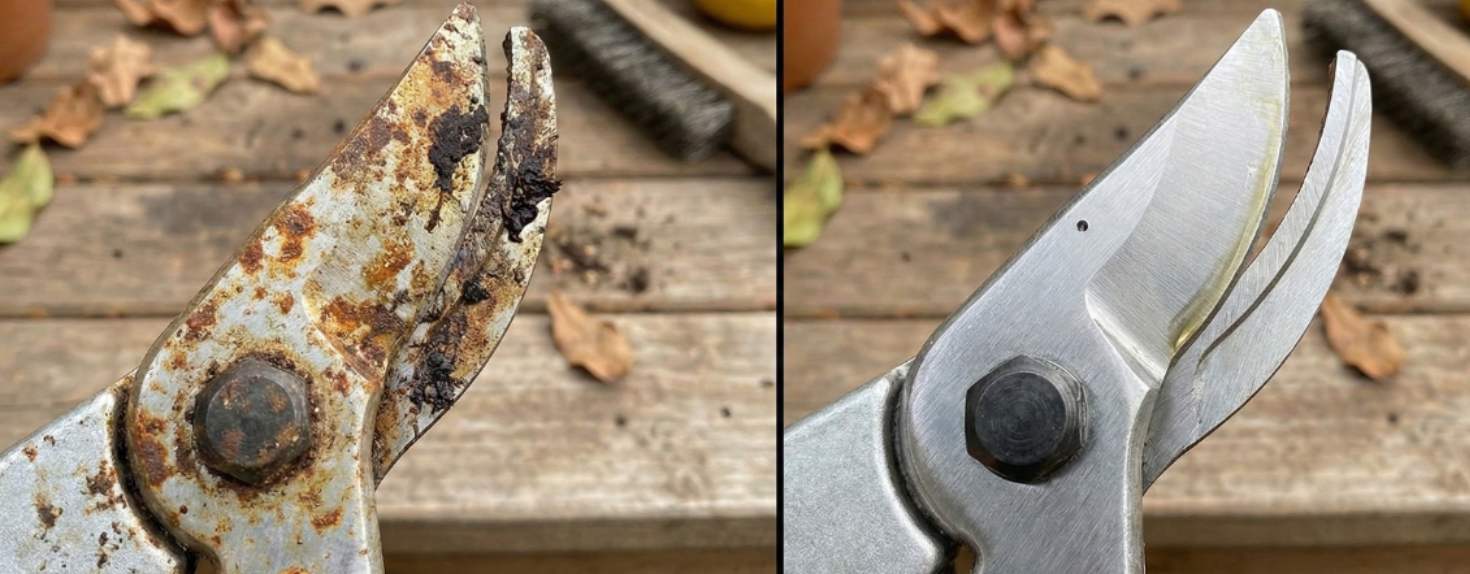
You can do many things with garden shears, such as trimming plants, shaping shrubs, or just keeping your garden looking tidy. However, they can also get water, dirt, and plant sap on the blades. This can all contribute to rust forming on the blades.
Whether you use hand tools or high-quality cordless garden shears, you can avoid rust if you clean and care for them properly. In this guide, we will discuss everything you need to know about rust and how to get rid of it.
1. Why Cleaning Rust from Garden Shears is Essential
A small amount of rust is not such a huge problem. However, Rust is a form of corrosion that affects your tools. Let’s check out why cleaning rust from garden shears is important:
Maintains Cutting Effectiveness
The metal's surface is rough due to rust. A rusty blade cannot cut wood effectively, resulting in crushed stems rather than clean cuts. This is not good for the plant and makes your work very difficult.
Prevents Further Corrosion and Damage
Rust never happens just one time. If it starts, it eats deep into the metal. Therefore, you must know how to remove rust from garden shears. In this way, the metal will eventually become rough and weak, hence the blade may even break.
Ensures Safe Use
Sticking of the blades due to rust may require you to be forceful. It can slip in your hand, and you might get a cut. Tools such as ONEVAN Pruning Shears need to be maintained to ensure they respond as desired.
Saves Money and Effort
Purchasing the most suitable tool is an investment. All you need to do is take time to wash them, and you will not need to spend $50 to replace them the following season.
Prevents the Spread of Rust to Other Tools and Plants
You have the whole lot in a bucket, and one of them rusts a little; the entire oxidation and water can occasionally spill over to the other tools. Better still, a rusty, pitted blade can harbor bacteria and fungi.
2. Common Causes of Rust on Garden Shears
In most cases, the problem is usually brought about by ourselves through our habits. Let’s check what causes the rust:
Exposure to Moisture and Humidity
Exposure to moisture is the main reason shears rust. This often happens if you leave your tools on the grass overnight. By morning, the metal is covered in dew. The oxidation process starts. Humidity in the air causes rust.
Lack of Proper Maintenance and Storage
A few of us complete gardening and just get rid of our tools on a shelf. Dirt absorbs moisture and keeps it on the blade. This contributes to rust.
Use of Unsuitable or Low-Quality Materials
Cheap tools are made from untreated metal, and they are vulnerable to corrosion. However, costly battery garden shears can rust out when the protective coating is not maintained, and they are not serviced.
Cutting Certain Plants or Chemicals
The sap of some plants is very acidic. This acid damages the metal. Moreover, when you cut bags of fertilizer or salt using your shears, the chemicals can lead to an instant chemical reaction, which might cause quick rusting.
Mechanical Damage and Wear
The blades bang together whenever you cut your shears. The first place where rust is usually found is in this exposed metal.
Inadequate Lubrication
Apply a thin layer of oil on the metal blades to make them waterproof. The metal is exposed to oxygen and water without oil.
3. Signs Your Garden Shears Have Rust
Sometimes rust is visible clearly, but at other points it hides. Here are some red flags;
- Rust Spots: Orange or brown patches on the blade show rust.
- Rough Surface: Rust makes a blade rough and dull.
- Reduced Cutting Performance: Your cutting performance has decreased as you are struggling more than normal to cut an easy branch.
- Blades are jammed: If the shears don't bounce back after cutting, they have rust.
- Foul Smell: Do you smell a metallic fragrance on your hands after using the tool? This is a sign of rust.
4. Potential Risks of Ignoring Rust Buildup on Garden Shears
Do not ignore the presence of rust on your blades. Rust is like a disease for metal. If you leave it there, your tools will stop working well. So, instead of a clean cut, your cordless garden shears will crush the stems. This hurts your plants and makes your work much harder.
The metal is also weak and brittle due to rust. When the rust cuts deep into the steel, the tool may break or snap as you are using it. This is risky as fragments might fly and hit you.
Another big problem is that Rust can harbor bacteria and fungi, posing a risk to plant health. In the rusty areas, there are bacteria and fungi. You can infect a species of a healthy plant when you cut it. It is also cheaper to keep your ONEVAN Brushless Pruning Shears clean.
Cleaning a small amount of rust is far less expensive than purchasing a new battery garden shear due to the destruction of the old ones.
5. Tools and Materials Needed to Remove Rust from Garden Shears
Before you start, gather your goods. You don't need a professional workshop to do this.
Household Items
You mostly have these in your kitchen:
- White Vinegar: This is the best natural acid that can be used to dissolve rust.
- Baking Soda: It is excellent for creating a scrub and balancing acid.
- Lemon Juice and Salt: A classic combo for light rust.
Commercial Rust Removers
Rust is a thick and stubborn substance. If it does not go away with a wipe, you can use a chemical remover. Find a suitable product in the market. Some chemical removers are harsh, so you should be careful.
Abrasive Tools
You need something to scrub with:
- Steel Wool: (Grade 0000 gives the best finish):
- Sandpaper: Use medium grit for heavy rust and fine grit for finishing.
- Wire Brushes: Works well in the hook and in the tight areas.
Protective Gear
Wear gloves always to save your skin against chemicals and the sharp blades. Safety glasses are also a good idea, particularly when you are using a wire brush, because small pieces of rust can fly up.
6. Step-by-Step Methods to Clean Rust from Garden Shears
Now, let's get to the work. Here are five simple steps to solve the problem of how to clean rust off garden shears.
Method 1: Soaking in White Vinegar
This is the most common rust removal method.
- Place shears in a container.
- Pour white vinegar on the rusty sections.
- Leave to soak for 12-24 hours.
- Remove and scrub rust off with a brush.
- Rinse and dry immediately.
Method 2: Baking Soda Paste Application
This is great for minor rust, or just if you want to do rapid rust removal without soaking the whole tool.
- Mix some baking soda with water to create a thick paste.
- Apply the paste to the rusty sections.
- Leave it for an hour.
- Take an old toothbrush or steel wool and scrub the paste in.
Method 3: Using Lemon Juice and Salt
- Dust salt on the rusty surface.
- Sprinkle lemon juice on the salt until it is wet.
- Let it sit for 2-3 hours.
- Scrub the mixture off. The salt serves as a scrubber, and the citric acid rusts away.
Method 4: Commercial Rust Removers and Chemicals
When you possess very old, crusty tools, go to the tool store. Acquire the chemical and follow directions. Usually, one places the liquid on, waits a couple of minutes, and wipes it off. It is the quickest method of how to get rust off garden shears that have been in a wet shed for years.
Method 5: Mechanical Rust Removal Techniques
The method of mechanical rust removal is, firstly, a physical scraping and sanding of the rust off the blade or frame of a tool with such tools as steel wool, sandpaper, or a wire brush.
7. Cleaning and Maintenance After Rust Removal of Garden Shear
After you have removed the rust, you are not done. Thus, when you stop here, the rust will be back in two days.
Sharpening and Oil Application
When people try to remove rust, they notice that the blades are dull. They cannot deliver a sharp cut. So, find out how to sharpen rusty garden shears. Apply a whetstone or a diamond file.
Follow the original angle of the blade and stroke away from your body. Your shears feel new after you sharpen them.
Lubricating Hinges and Moving Parts
Use machine oil ( 3-in-1 oil or WD-40) on the pivot bolt. Open and close the shears multiple times. This means the oil absorbs into the joint. It paves the way for smooth movement.
Proper Drying Techniques to Avoid New Rust Formation
Wipe your shears each time you use them with a dry cloth. If you have pruned weak plants, rinse the blade in soapy water, dry it thoroughly, and apply a little oil before storing.
8. How to Prevent Rust on Garden Shears?
Let’s find out the easy ways to prevent rust on garden shears:
- Wipe them down: When you are done in the garden.
- Store them inside: It is better than a shed with holes in it.
- The Sand Bucket Trick: Fill a bucket with sand and a little bit of motor oil. After use, always insert your shears in the sand a few times. Sand takes up the dirt, and the oil covers it.
- Focus on quality: Modern garden tools are highly durable, and they have fewer maintenance demands.
An easier solution for rusty and stiff shears is purchasing a quality pair of shears, such as the ONEVAN Cordless Pruning Shears. Its shears have a brushless motor and blade made of SK5 steel, which is both non-corrosive and non-wear. They do the squeezing for you since they are battery-powered pruning shears, so they always give you a clean cut with no effort. Additionally, they include a telescoping pole to allow reach to high branches, so you won't have to use a ladder.
This equipment also has simple maintenance requirements. Higher-quality tools typically require less maintenance compared to hand tools. You have to wipe the blades and check the battery. Your shears will stay functional for years.
9. Conclusion
Knowing how to clean garden shears rust is a skill every gardener needs. It must be loved regardless of whether you have one of the old-time manual ones or the current cordless garden shears. By following the above steps, your tools could last several more years.
Also, the way your tools are kept impacts the aesthetics of your garden, and a little maintenance can save you a lot of money. Don't let rust take over your tools. Using vinegar and a wire brush can effectively restore your tools.
10. FAQs
How often should I remove rust from my garden shears?
It is important to check for rust each time you use them. Thus, if you garden very frequently, then a deep clean and oiling should be done at the end of every gardening season or once a month.
What’s the safest homemade rust remover for garden shears?
The white vinegar for sure. It is non-toxic and very cheap. All one has to do is rinse it off and grease the metal afterward, because vinegar makes the metal too dry.
Will I be able to sharpen my garden shears after removing the rust?
Yes, you should sharpen them. The second procedure after determining how to get rid of rust on garden shears is sharpening them so that they become useful.
How do I store garden shears to prevent rust in humid climates?
Rust can be caused by air in humid regions. Keep your tools in a closed plastic container with a couple of packets of silica gel. This helps eliminate moisture from the air.
Can rust on garden shears cause plant diseases?
The rust is not an illness affecting plants themselves, but the uneven surface of the rusty blade contains dangerous fungi and bacteria. They can bring about such diseases as canker or blight to a healthy plant when you cut into it.
Is it better to replace or clean heavily rusted garden shears?
When the rust has left deep holes (pitting) that extend through the blade or when the metal is thin and brittle, then it is better replaced. In most cases, if you have high-quality battery garden shears, you can replace the blades rather than the entire tool.