Plastic applications benefit from a rivet gun, providing secure assembly without the need for welding or adhesives. Moreover, the tool accommodates a range of rivet sizes and materials suitable for plastic components.
Rivets offer distinct advantages for plastic fastening projects. You complete assembly tasks more quickly than with traditional screw installations. Furthermore, the bonds resist loosening from vibration and mechanical movement. The visual appearance remains clean, with no protruding bolt heads or nuts.
Also, industries from appliance manufacturing to automotive production rely on riveted plastic assemblies. You will develop proficiency through understanding appropriate tools, suitable materials, and proper installation procedures. Subsequently, plastic presents unique challenges compared to metal riveting. The material can crack, deform, or melt when installed improperly.
1. Applications and Projects Using a Rivet Gun on Plastic
Appliance Repairs and Assembly
Household appliances have many plastic panels and housings. For example, washing machine control panels use plastic-compatible rivets. Refrigerator interior parts are attached using careful riveting. When repairs are needed, you must match the original methods. Start by replacing broken mounting points and installing new rivets in stronger locations. Pay special attention to heat-sensitive plastics near motors and heating elements.
The ONEVAN 20000N Brushless Cordless Rivet Gun has adjustable force settings that work well for delicate appliance plastics. Modern appliances use specialized plastics with specific strengths and flexibilities.
It is necessary to select rivets that are compatible with these materials. Some housings have thicker areas designed for rivets. Always follow the original equipment specifications when choosing replacement fasteners.
Automotive Interior and Exterior Plastic Parts
Dashboard panels attach using rivets. For instance, door panels have decorative trim pieces fastened to structural backing. Plastic consoles need connections that handle daily use and temperature changes. Similarly, interior riveting needs careful technique to avoid visible damage. You will work with textured and smooth surfaces that need different handling. Some automotive plastics become brittle with age, leading to cracking and compromised integrity if not monitored. Test the installation force on hidden areas first to prevent mistakes on visible surfaces.
In contrast, exterior plastic parts are subject to harsher conditions. For example, bumper covers attach to mounting brackets through riveted connections. Fenders and side skirts need fasteners that resist vibration and impact. For both interior and exterior parts, automotive work emphasizes vibration resistance to enhance joint longevity and performance under dynamic conditions, as engine movement and road conditions constantly stress fastened joints. Rivets handle these forces better than many threaded fasteners.
Plastic Furniture and Storage Solutions
Homes and offices often have plastic furniture that needs to be assembled. Chairs have molded plastic seats and backs attached to sturdy frames. Subsequently, tables use plastic parts for legs, braces, and decorative elements. Assembly instructions show where rivets go and what types to use. Follow the manufacturer's guidelines for connections intended to support significant weight loads.
On the other hand, reinforced mounting points are designed to handle installation forces. However, outdoor plastic furniture faces extra challenges. Rain, sun, and temperature changes stress riveted joints. Use UV-resistant plastics with rust-proof rivets for longer life. Reinforce critical stress points, such as joints and connection areas, with extra fasteners or backing plates.
Additionally, commercial spaces need furniture that handles heavy use. School and office chairs need strong fastening to survive daily wear. Conduct regular checks on high-use furniture to ensure that all fasteners remain secure. Replace worn rivets before they fail to prevent accidents and extend furniture's lifespan.
Hobbyist and Maker Projects
Scale model builders make detailed replicas using different types of plastic. For instance, custom prototypes use experimental fastening methods. DIY crafts feature decorative, functional riveted connections. You will work with curved surfaces and tight spaces that need careful tool positioning. Generally, small projects use tiny rivets and special installation tools.
Similarly, stress point management is important in thin plastic assemblies. Strategic reinforcement prevents cracking around rivet locations. When developing prototypes, test different rivet types and placements. Although some projects combine rivets with adhesives for extra strength, temporary mockups use removable fasteners before switching to permanent rivets.
Electrical Equipment and Wiring Covers
Circuit boxes use riveted panels to block unauthorized access. Wiring ducts attach through tamper-resistant fasteners. Furthermore, electrical panels in homes and commercial buildings have plastic parts secured with special rivets. Vibration from electrical equipment can loosen threaded fasteners. Therefore, rivets provide permanent connections that resist movement. However, the need for service access must be carefully weighed against security requirements. Some covers use both approaches—rivets for structural strength and screws for access panels.
You also need to follow safety rules to control fastening methods in electrical work:
- Check that rivet materials meet code requirements.
- Non-conductive rivets work well for certain applications because they prevent the formation of electrical pathways.
- Proper installation stops covers from loosening and exposing dangerous parts.
- Position rivets to allow cover removal without complete disassembly.
- Semi-permanent installations use special rivet types that make future service easier.
- Balance security with maintenance access through careful planning during initial installation.
Garden Tools and Outdoor Equipment
Lawn care equipment has plastic housings that protect mechanical parts. Likewise, lawnmowers have covers secured through weather-resistant rivets. For instance, string trimmers use lightweight plastic housings that need durable fasteners. Watering equipment combines plastic parts with riveted connections. Moreover, outdoor exposure requires materials that resist moisture and UV damage. Choose rivets and plastics rated for exterior use. For example, stainless steel and nylon rivets provide excellent weather resistance.
Furthermore, impact resistance is crucial for garden equipment that gets rough handling. Riveted joints absorb shock without coming apart. The flexibility of properly installed rivets handles material movement. Additionally, storage in outdoor sheds exposes equipment to extreme temperatures. Similarly, account for heat expansion when sizing rivet holes. Seasonal temperature changes stress joints through repeated cycles of expansion and contraction.
Children's Toys and Recreational Items
Toy manufacturing depends heavily on safe plastic fastening methods. For example, playhouses are assemble through riveted panels that resist active play stress. Outdoor playground equipment uses rivets that meet strict safety standards. Similarly, recreational items need connections that survive rough handling by children.
Several crucial safety considerations must be addressed in this context:
- Install rivets with smooth, rounded heads to prevent injury risks.
- Remove sharp edges through proper technique and correct rivet selection
- Children test products in unexpected ways. Overengineer connections to handle abuse and misuse.
- Use multiple rivets to distribute loads and prevent failures caused by stress concentrated at a single location.
- Provide clear instructions to prevent errors that could affect safety.
2. Selecting the Right Rivet and Rivet Gun for Plastic Projects
Types of Rivets Suitable for Plastic
Plastic Rivets
Plastic rivets specifically designed for plastic-to-plastic connections offer optimal compatibility. These fasteners have material properties compatible with those of commonly used plastics. This avoids galvanic issues and material incompatibility. Plastic rivets expand predictably during installation, generating no excessive force. The material flexibility accommodates movement in joined components.
Nylon Rivets
Nylon rivets provide excellent strength and chemical resistance. The material withstands automotive fluids, household cleaners, and exposure to outdoor elements. You select nylon for applications requiring long-term reliability. Color options allow matching or contrasting with the base plastic appearance. Black nylon rivets offer a professional appearance for most applications.
Aluminum Rivets
Aluminum rivets are compatible with many types of plastic. The lightweight metal provides strength without excessive weight. You use aluminum rivets when metal fasteners are specified. Corrosion resistance suits both indoor and outdoor applications. The material conducts both heat and electricity, which is important in certain installations.
Hard Plastics
Hard plastics, such as ABS and polycarbonate, accept most rivet types. These materials resist deformation during installation. You apply standard riveting techniques with minor adjustments in force. Structural applications in hard plastics achieve reliable strength. The material thickness determines minimum rivet diameter requirements.
Softer Plastics
First, softer plastics, such as polyethylene and polypropylene, require gentler handling. You reduce installation force, preventing material crushing. Specialized rivets with wider bearing surfaces distribute pressure more evenly. Backing washers reinforce thin sections. Some soft plastics require insert rivets providing reinforced mounting points.
The second point is that rivet length calculations account for the combined thickness of the materials. You add grip range, allowing the rivet body to expand properly. Insufficient length results in weak joints with poor load-bearing capacity.
Lastly, head style selection affects both function and appearance. Standard dome heads suit most applications. Countersunk rivets create flush surfaces when appearance is a priority. Large flange heads distribute stress in soft plastics.
Performance of Different Rivet Gun Types in Plastic Riveting
Precise Control With Manual Rivet Guns
Manual rivet guns offer precise control over installation force. You feel the rivet-setting process through hand-pressure feedback. This control prevents over-compression in delicate plastics. Manual operation is suitable for occasional use and small projects. Physical effort limits continuous operation with these tools. The cost remains affordable for hobbyists and DIY users.
Consistent Force of Pneumatic Rivet Guns
Pneumatic rivet guns deliver consistent force through regulated air pressure. You adjust the air supply by controlling installation intensity. Professional shops favor pneumatic tools for production efficiency. The tools handle numerous rivets without operator fatigue. Air compressor requirements limit portability. Noise levels may be a concern in certain work environments.
Cordless Rivet Guns Portability
Cordless rivet guns offer ultimate portability without compromising performance. Modern battery technology delivers power rivaling pneumatic tools. You work in remote locations without air supply or electrical access. The ONEVAN rivet gun is a cordless model with adjustable force settings, ideal for plastic work. Battery capacity determines runtime between charges. Rapid charging systems minimize downtime in busy shops.
Adjustable Force
Adjustable force capability ranks as the most critical feature for plastic riveting. You dial in the exact pressure to prevent material damage. Different plastic types and thicknesses require force variations. Fine adjustment increments allow precise tuning. Some tools offer multiple force presets for common applications. Without adjustability, you risk cracking fragile plastics consistently.
Ergonomic Design
Ergonomic design reduces operator fatigue during extended use. You evaluate grip comfort and trigger reach. Tool balance affects precision and control. Weight becomes significant during overhead work. Comfortable operation improves installation quality. Professional-grade tools justify higher costs through superior ergonomics.
Stroke Length
Stroke length adjustability accommodates various material thicknesses. You optimize tool performance for specific installations. Shorter strokes are suitable for thin plastics, reducing cycle time. Longer strokes handle thicker assemblies. The adjustable stroke prevents wasted motion, improving efficiency.
3. Surface Preparation Before Riveting Plastic
Cleaning and Preparing Plastic Surfaces
Plastic surfaces accumulate contaminants, which can interfere with proper rivet installation. Dust particles prevent flush contact between materials. In the beginning, you remove all loose debris using compressed air or soft brushes. Furthermore, manufacturing residues from molding processes require cleaning. Mold release agents create slippery surfaces, affecting rivet grip.
Oils and fingerprints compromise joint integrity in precision applications. Therefore, you degrease surfaces using plastic-safe cleaners. Isopropyl alcohol works well with most plastic types. However, exercise caution; avoid harsh solvents that degrade or embrittle plastic materials. Acetone damages many common plastics. Always test cleaners on inconspicuous areas first.
Marking and Measuring Rivet Locations on Plastic
First, accurate rivet placement ensures proper load distribution and professional appearance. You measure from reference edges using precision tools. Digital calipers provide exact measurements. Transfer punches create shallow indentations marking locations. Avoid deep marks weakening plastic at critical points.
Secondly, rivet spacing in plastic requires careful calculation. You maintain distances, preventing stress concentration. Closer spacing than necessary adds cost without a strength benefit. Excessive spacing allows joint movement under load. Engineering guidelines provide spacing recommendations for various plastic types. Structural applications follow specific spacing ratios based on material properties.
Drilling Accurate Holes in Plastic
Firstly, drill bit selection significantly impacts hole quality in plastic. Step drill bits create clean holes without grabbing or cracking. The gradual increase in diameter reduces stress during cutting. Standard twist bits work with proper technique adjustments. You select sharp bits specifically for plastic drilling. Dull bits generate heat and create rough holes.
Secondly, drilling speed affects plastic behavior during cutting. You use slower speeds, preventing heat buildup. High speeds melt plastic, creating burrs and rough edges. Variable speed drills allow optimization for different plastic types. Perform tests on scrap material to determine the optimum speed settings for interference-free cutting. Heat-sensitive plastics require particularly slow speeds.
Now, the final step: steady pressure throughout drilling prevents cracking. You avoid forcing the bit through the material. Let the bit cut at its own pace. Excessive pressure generates heat and stress. Insufficient pressure produces ragged holes. Consistent moderate pressure yields the best results across plastic types.
4. Step-by-Step Guide: How to Use a Rivet Gun on Plastic
The Essential Tools and Materials Need to Use a Rivet Gun on Plastic
Here are the essential tools and materials, organized for a smooth installation process:
-
Rivet Gun:
A rivet gun suitable for plastic applications forms the centerpiece. The ONEVAN 2.4–5.0mm Cordless Rivet Gun Tool excels at plastic riveting through its adjustable force control and ergonomic design.
-
Plastic-Compatible Rivets
You'll need rivets matching your material type and thickness, stored in organized containers. Proper rivet selection is crucial as it prevents installation problems.
-
Drill and Bits
A variable-speed drill is needed to create holes for rivet insertion. You should include sharp bits designed for plastic drilling and consider using step drill bits for handling various hole sizes effectively.
-
Measuring and Marking Tools
Tools such as calipers and rulers ensure accuracy. Use marking pens or center punches to locate rivet positions precisely.
-
Cleaning Supplies
These materials prepare surfaces for riveting. You need plastic-safe solvents and lint-free cloths. Compressed air removes dust from holes and surfaces, as cleanliness directly affects joint quality and longevity.
Installing the Rivet in Plastic
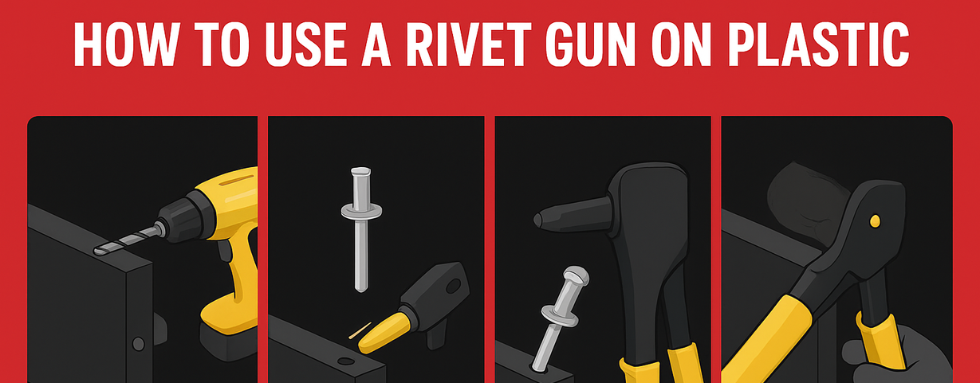
First, you need to insert the rivet mandrel into the rivet gun nose piece. The mandrel head seats completely in the pulling mechanism. Different rivet sizes may require nose piece changes. Verify secure mandrel fit without excessive play. Loose mandrels slip during installation, producing poor results.
Then, you should insert the rivet through the pre-drilled hole from the visible side. Push the rivet body until the manufactured head contacts the plastic surface. Both plastic pieces being joined should sit flush, with no gaps. Misaligned holes prevent full rivet insertion. Back out the rivet, realign materials, and retry if resistance occurs.
Next, position the rivet gun perpendicular to the work surface. You hold the tool firmly with one hand and control the trigger operation. The nose piece presses lightly against the rivet-manufactured head. Avoid excessive pressure before beginning the pull. Maintain perpendicular positioning throughout installation. Tilting creates uneven compression and weak joints.
After that, apply steady, even pressure during the riveting process. You pull the trigger smoothly without jerking. The mandrel draws through the rivet body, expanding it gradually. Feel resistance increase as plastic compresses. Continue pulling until the mandrel breaks at its designed point. The breaking snap indicates complete installation.
Adjust technique based on plastic thickness and toughness. Thin plastics require a gentler installation force. You monitor for surface deformation during pulling. Thick plastics require sufficient force to fully expand the rivet. Hard plastics accept a more aggressive technique than soft materials. Experience teaches appropriate force levels for different situations.
Inspecting the Finished Joint on Plastic
Examine the manufactured head for proper seating; it should sit flush against the plastic surface. Gaps indicate insufficient compression or incorrect rivet length, while tilted heads suggest misaligned installation. Proper seating distributes stress evenly across the joint.
Additionally, check the surrounding plastic for cracks or stress marks by looking for whitening around the rivet, which indicates stress concentration. Fine cracks may appear immediately or develop later, and surface deformation suggests excessive installation force, though minor marks may be acceptable depending on application requirements.
Furthermore, when possible, inspect the back side, where the formed head should be symmetrical and fully expanded, with an adequate diameter for the rivet size. Incomplete expansion indicates insufficient pulling force, while properly formed heads are smooth without splitting or cracking. Once inspection is complete, address defects or weak joints immediately by removing failed rivets and installing replacements in new locations. Drilling out plastic rivets requires care to prevent hole enlargement; if needed, drill slightly larger holes for the next-size rivets. However, significant material damage may require repair patches or component replacement.
5. Common Mistakes and Troubleshooting When Riveting Plastic with a Rivet Gun
Using Rivets That Are Too Large or Exceed Plastic Thickness Specifications
Oversized rivets generate excessive installation forces. You crack plastic while attempting to compress rivets beyond the material's capacity. The rivet diameter must be matched to the plastic thickness and strength. Grip range calculations prevent length-related problems. Installing rivets in plastic requires more conservative sizing than metal applications.
Attempting to use metal rivet specifications for plastic leads to failures. You consult plastic-specific guidelines for sizing. The material properties differ dramatically from those of metal. What works in steel may destroy plastic. Engineering resources provide sizing charts for various plastic types.
Drilling Holes That Cause Plastic Cracks or Burrs Due to Improper Technique
Dull drill bits tear plastic rather than cutting cleanly. You maintain sharp bits through regular replacement. Forcing dull bits through material generates heat and stress. The resulting holes feature ragged edges and stress cracks. Sharp bits cut effortlessly, producing clean holes.
Excessive drilling speed melts plastic around holes. You reduce speed settings for plastic materials. Heat buildup can create rough surfaces and dimensional inaccuracies. Molten plastic hardens with unpredictable properties. Slow, steady drilling prevents thermal damage.
Applying Excessive Pressure During Riveting Leads to Undue Plastic Damage
High installation forces crush plastic around rivets. You adjust rivet gun settings for plastic applications. Force levels suitable for metal exceed plastic capacity. Surface cracking may appear immediately or develop over time. Adjustable tools allow matching force to material strength.
Rushing the installation process makes it difficult to properly monitor the application of force. You work deliberately, feeling material response. Excessive enthusiasm damages components requiring replacement. Patient technique produces better results with fewer failures. Time invested in careful work prevents costly mistakes.
Selecting Incompatible Rivet Materials Causing Corrosion or Mechanical Failure
Chemical interactions between rivets and plastics cause long-term problems. You research material compatibility before finalizing selections. Some types of plastic react with certain metals. The reactions weaken joints or damage the surrounding material. Compatibility charts guide appropriate combinations.
Galvanic corrosion affects mixed-metal installations. You avoid dissimilar metals in corrosive environments. Aluminum and steel combinations corrode rapidly when exposed to moisture. Plastic insulation between metals reduces corrosion rates. Proper material matching prevents premature failures.
Insufficient Support or Clamping Causing Plastic Bending or Warping During Riveting
Thin plastics require substantial support during installation. You provide a rigid backing that prevents flexing. Inadequate support allows bending, reducing joint quality. The finished assembly may appear wavy or distorted. Proper clamping maintains alignment throughout installation.
Large panels require multiple strategically distributed clamps. You secure areas around rivet locations firmly. Movement during installation creates misalignment. Progressive assembly techniques secure one section before moving to the next. Proper fixturing prevents the accumulation of errors across large assemblies.
Rushing the Process Leading to Misalignment or Uneven Riveting
Hurried work produces inconsistent results. You allocate sufficient time for careful installation. Skipping preparation steps compromises final quality. Measuring twice and installing once prevents mistakes. Production pressure must not override proper technique.
Fatigue during extended sessions affects quality. You take breaks to maintain concentration. Tired operators make errors in judgment and execution. Fresh perspective improves decision-making and precision. Scheduling realistic work sessions prevents fatigue-related problems.
Overlooking Manufacturer Recommendations for Rivet and Plastic Compatibility
Manufacturers provide specifications for good reasons. Originally, you follow recommended rivet types and sizes. Ignoring guidelines risks structural failures and safety issues. Testing alternative approaches requires engineering validation. Default to manufacturer recommendations unless specific needs demand otherwise.
Installation instructions contain valuable insights. You read documentation thoroughly before beginning work. Shortcuts bypassing recommended procedures cause problems. Special requirements for specific plastic types are specified. Following instructions prevents avoidable failures.
Neglecting Safety Precautions Putting Operators at Risk
Broken mandrels can become projectiles, posing risks of injury. You wear safety glasses during all riveting operations. Mandrels eject forcefully when breaking free. Bystanders must remain clear of work areas. Spent mandrels create tripping hazards requiring prompt cleanup.
Sharp plastic edges and burrs cut unprotected skin. You wear appropriate work gloves during handling. Cut-resistant materials provide the best protection. Gloves must allow sufficient dexterity for tool control. Balancing security with functionality matters.
6. Conclusion
Mastering rivet gun techniques for plastic opens diverse project possibilities. You achieve professional results through proper tool selection and installation procedures. Understanding the properties of plastic materials prevents common failures. These skills are applicable across numerous industries and applications.
The installation technique determines the final quality and longevity. You maintain proper alignment and apply appropriate force throughout processes. Inspection catches problems before they compromise functionality or safety. Learning from mistakes accelerates skill development. Each project builds experience, informing future work.
Following correct rivet gun settings makes a substantial difference in outcomes. You adjust tools for each material and situation. Suitable rivet choices prevent compatibility problems. Surface preparation work pays dividends in joint strength and appearance. These fundamental principles guide successful plastic riveting in various applications, including automotive, electronics, and household items.
7. FAQ
What type of rivet is best suited for use on plastic?
Nylon rivets provide optimal compatibility with most plastic materials. The material properties match common plastics, preventing stress concentration. You achieve strong bonds without risking cracking. Aluminum rivets work well, offering higher strength. Plastic-specific rivets accommodate material flexibility better than metal alternatives. Select rivets matching your base plastic type and application requirements.
Can a standard metal rivet gun damage plastic materials?
Regular rivet guns can damage plastic when used incorrectly. You must adjust force settings for plastic applications. Metal-rated tools often generate excessive compression forces. The result includes surface cracking and material crushing. Modern adjustable tools accommodate both metal and plastic through force control. Without adjustability, exercise extreme caution when using metal-rated tools on plastic.
How can I prevent cracking when riveting plastic?
Several techniques prevent plastic cracking during installation. You drill holes slightly larger than the rivet shanks to allow for expansion. Reduce installation force below metal application levels. Support thin materials with rigid backing during riveting. Apply masking tape over the drilling area as reinforcement. Work slowly, monitoring for signs of stress. These precautions dramatically reduce cracking incidents.
Are cordless rivet guns suitable for plastic projects?
Cordless rivet guns work excellently for plastic applications. Modern battery-powered tools offer adjustable force, ideal for delicate materials. You benefit from portability without compromising control. Cordless models suit both professional and DIY plastic work. Verify that your chosen tool offers force adjustment capability. This feature proves essential for preventing plastic damage.
What size drill bit should be used for plastic rivet holes?
Drill bits should measure 0.005 to 0.010 inches larger than the rivet shank diameter. You provide clearance for plastic expansion during rivet setting. Insufficient clearance causes cracking from installation stress. Excessive clearance reduces joint strength. Manufacturer specifications indicate recommended hole sizes for specific rivets. Following these guidelines ensures proper fit and performance.
Can I use aluminum rivets on plastic materials?
Aluminum rivets work well with many types of plastic. The lightweight metal provides good strength without excessive weight. You verify compatibility between aluminum and your specific plastic. Some plastics react chemically with aluminum, requiring the use of alternative materials. Corrosion concerns matter less in plastic applications than in metal joints. Aluminum offers a good balance of strength, weight, and cost for plastic riveting.
How do I remove a rivet from plastic without causing damage?
Rivet removal from plastic requires careful technique. You drill out the rivet using a bit larger than the mandrel hole. Center the bit precisely on the manufactured head. Drill slowly to avoid heating plastic. Stop before penetrating completely through the back side. Punch out the remaining rivet material gently. Minimize pressure, preventing hole enlargement. Some damage inevitably occurs during removal.
Is reinforcement necessary before riveting plastics?
Reinforcement benefits thin or soft plastics. You install backing plates or washers to distribute stress. Hard, thick plastics rarely need reinforcement. Structural applications may require engineered reinforcement regardless of material thickness. Evaluate each situation considering material properties and load requirements. When uncertain, reinforcement provides a safety margin against failures.
Are all plastic types suitable for riveting with a rivet gun?
Most common plastics can be riveted with appropriate techniques. Hard plastics like ABS and polycarbonate rivet easily. Soft plastics, such as polyethylene, require gentler approaches. Very brittle plastics may crack despite careful installation. Extremely flexible plastics may not hold rivets securely. You test unfamiliar materials on scrap pieces first. Material data sheets indicate suitability for mechanical fastening methods.